Why Do More and More Parents Start Rethinking “Science Education”?
Many parents share similar questions:
“ If my child wants to study Arts or Business in the future, does Science still need to be prioritised?”
“Is Science simply about memorising formulas and doing experiments? Does it feel too far away from children’s everyday lives?”
“Is it enough to start learning Science properly in Secondary School?”
These questions may seem different, but they all point to the same underlying question: What is Science Education really cultivating?
To answer the questions that matter most to parents, we invited four Science teachers at Harrow Shanghai, graduates from the University of Oxford, Imperial College London and University College London (UCL), to share their perspectives on Science Education.
Why Should Science Education Begin in Kindergarten and Lower School?
Q: Many parents believe that Science is a subject that only needs to be taken seriously in Upper School. Why does Harrow Shanghai introduce rich scientific exploration from Kindergarten and Lower School? How do these early experiences influence students’ future learning?
Physics | Mr Gora & Mr Rodger
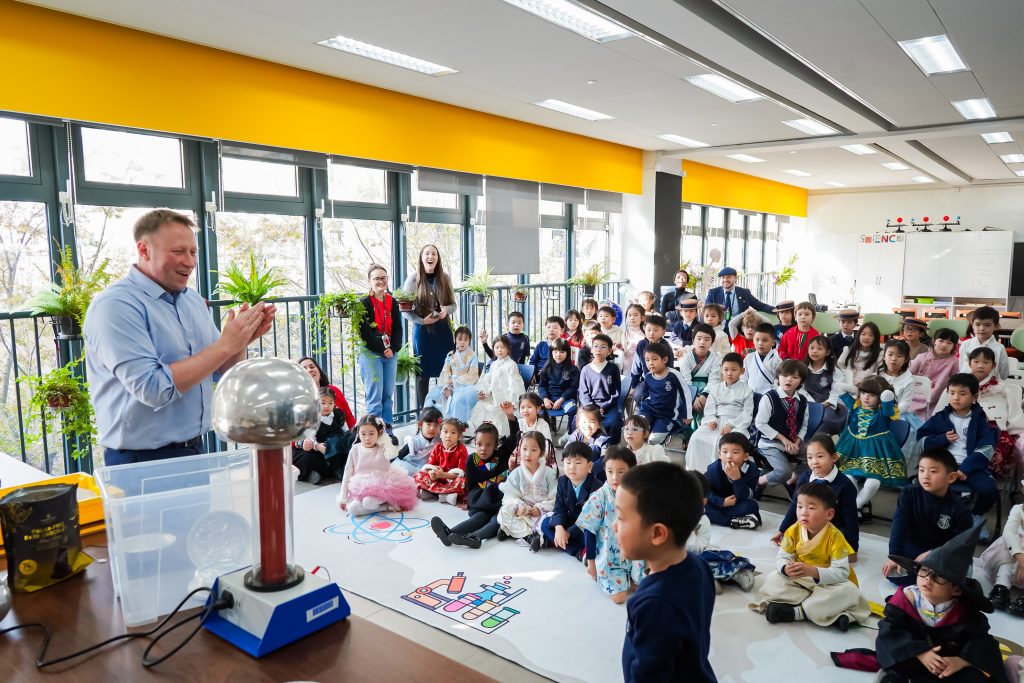
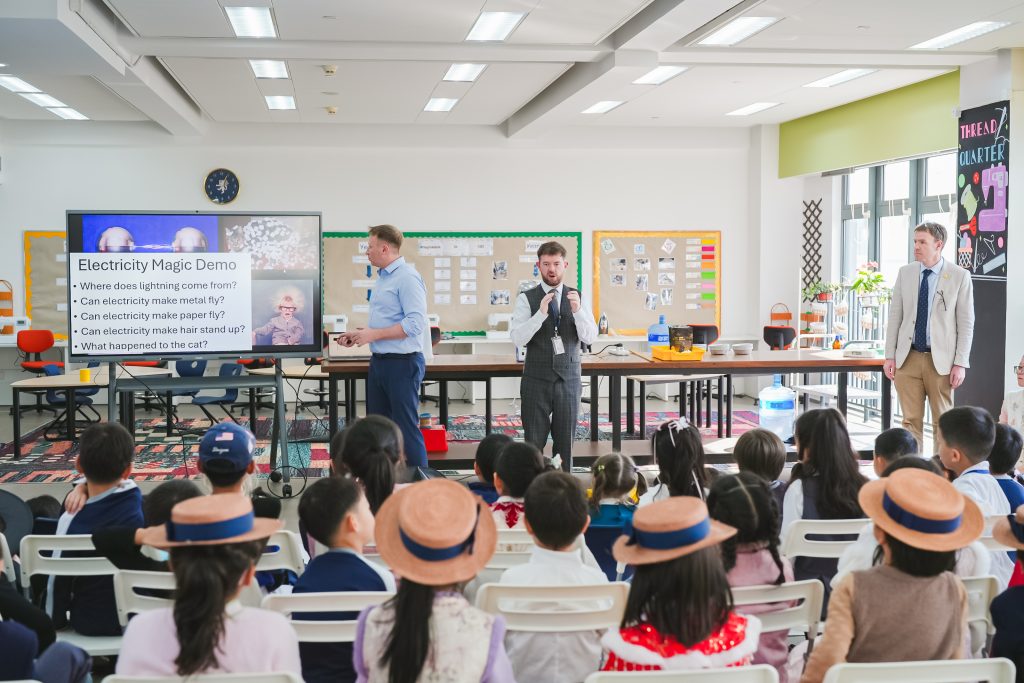
Children are naturally curious about the world around them. From an early age, they explore and experiment through play, while constantly asking scientific questions: “Why does a ball roll?” “Why do some things float?” “Why does a magnet attract objects?” These questions are a reflection of children being “little scientists” themselves. At Kindergarten and Lower School level, Physics learning is not about asking children to master complex formulas in advance. Instead, it encourages them to observe the world, ask questions, make predictions and discover answers through experiments.
For example, when learning about light, we do not begin with complex theories. Instead, we use real experiments involving reflection and refraction, allowing children to observe phenomena with their own eyes and discover patterns. These early experiences help children develop an interest and confidence in Science, allowing them to see that Science is not a distant or difficult subject, but a way of understanding the world.
Chemistry | Dr Sharples
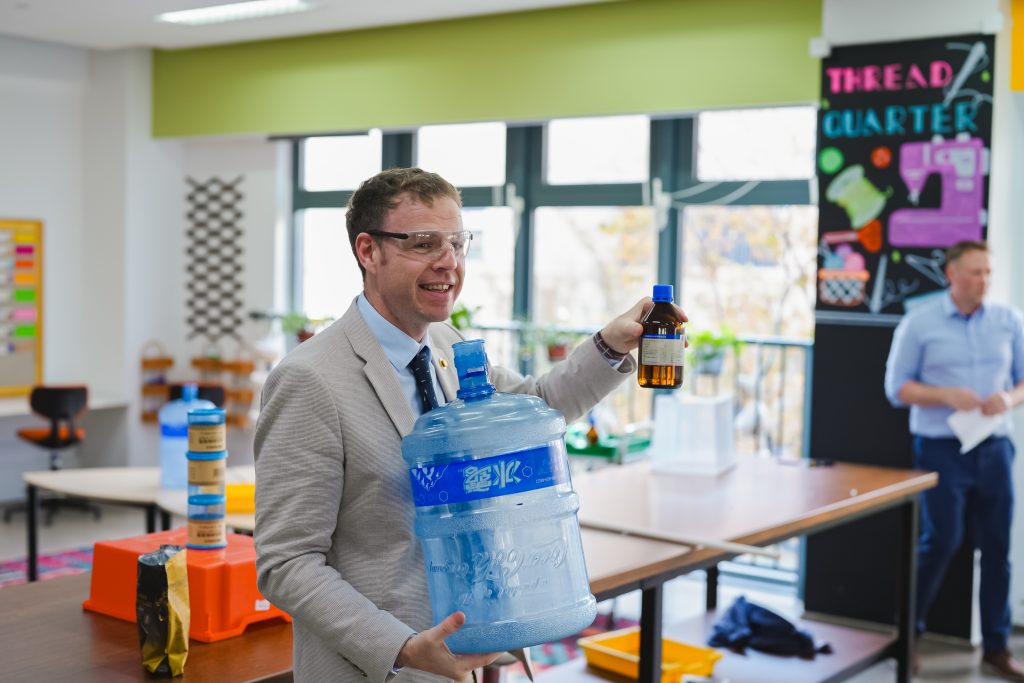
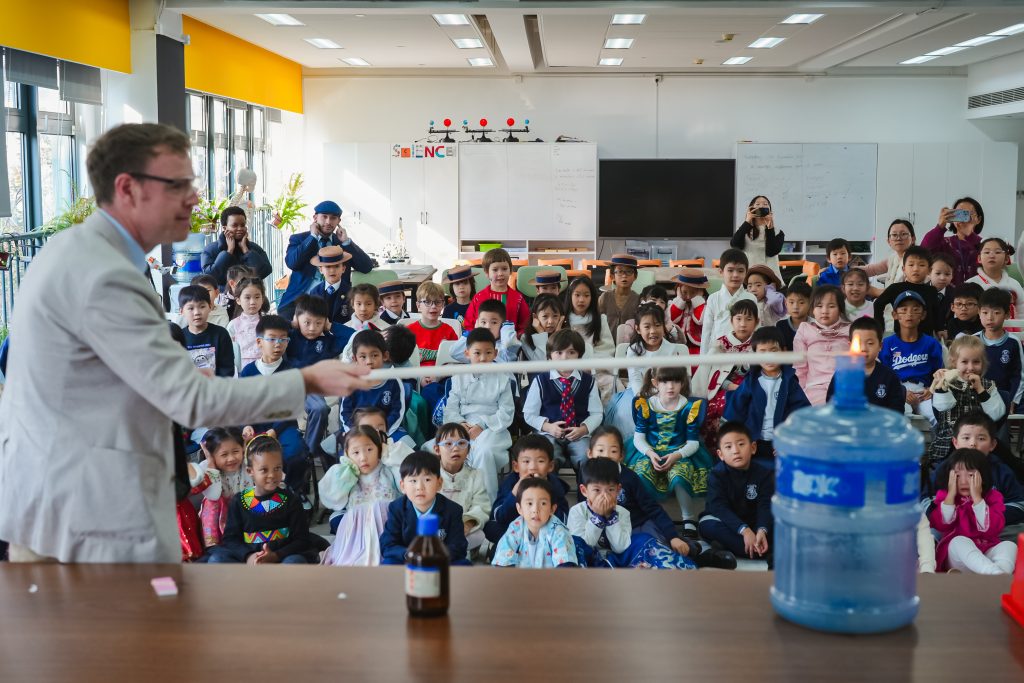
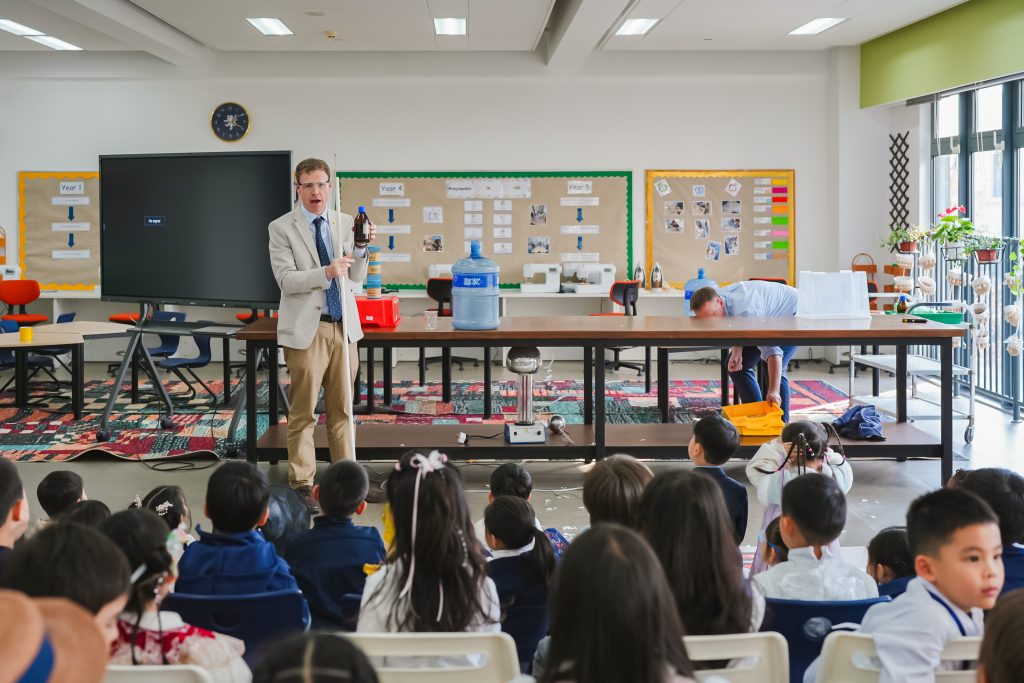
When we use experiments to introduce Chemistry to younger children, our purpose is not simply to demonstrate an interesting phenomenon, but to help them understand that the seemingly complex world around us can be explained through scientific principles.
For example, in the “woosh bottle” experiment, children observe a large flame produced by combustion, while learning that the science behind this phenomenon is connected to the principles that power rockets. Through these surprising and engaging experiences, children begin to recognise connections between different things and start asking, “Why does this happen?”
Being able to look beyond surface-level phenomena and explore the reasons behind them is an important skill developed through Science learning. The earlier children develop this spirit of exploration, the more likely they are to build a lasting understanding of and passion for Science in the future.
Biology | Mr Fraser
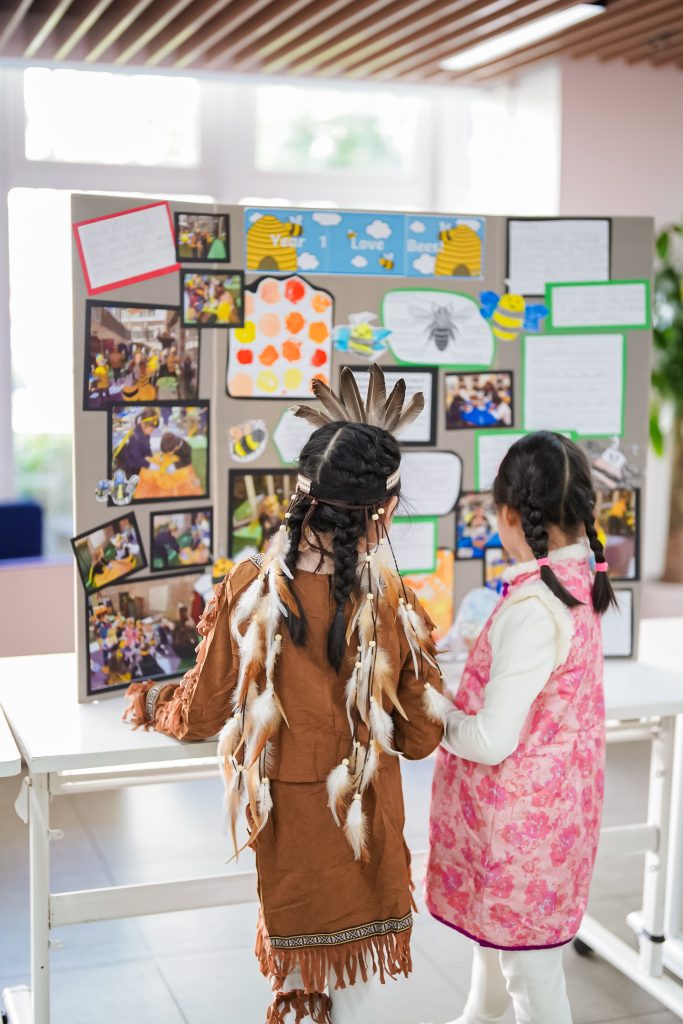
Exploring nature and life sciences from an early age is important for helping children develop an understanding of the world around them. Children are naturally curious and enjoy observing and asking questions such as: “Where do insects live?” “Why do plants grow?” “Why do changes happen in nature?”Biology learning is not simply about providing children with answers, but about building on their natural curiosity, encouraging them to observe, ask questions and explore the connections between different forms of life.
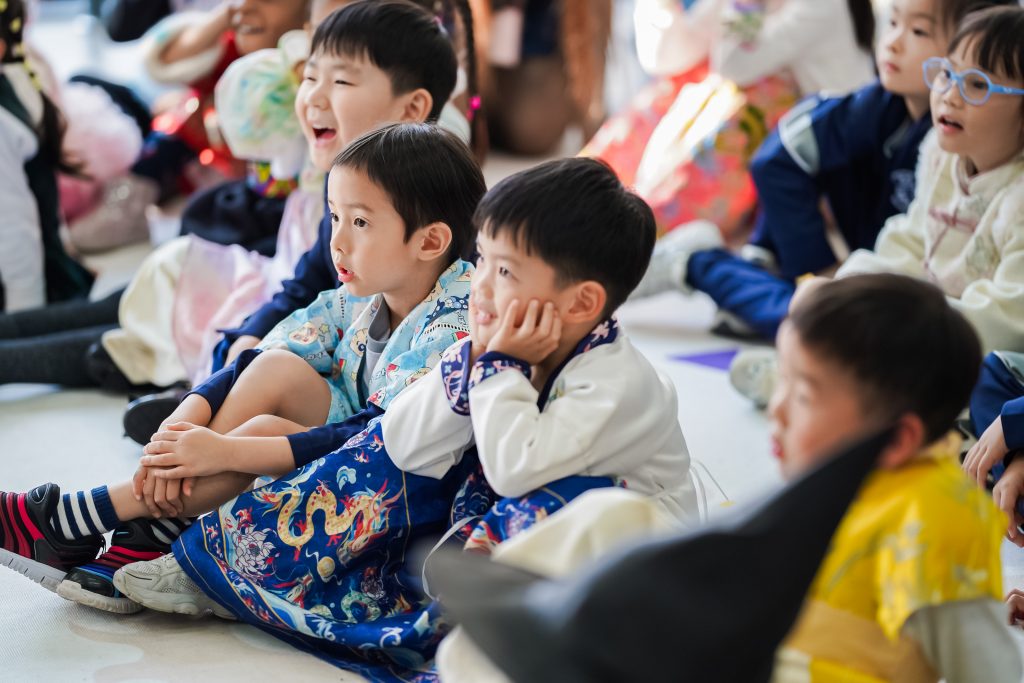
All three Subject Leaders highlighted the same key word — Curiosity. Science education is not about introducing complex knowledge too early, but about nurturing children’s passion for asking questions and making discoveries at the stage when they are most eager to explore the world.
What Skills Does Science Learning Truly Develop?
Q: Many parents think that Science is simply about learning knowledge and conducting experiments. In reality, from Kindergarten to Secondary School, what ways of thinking and skills does Science learning help children develop? How do these skills support their future learning and growth?
Physics | Mr Gora & Mr Rodger
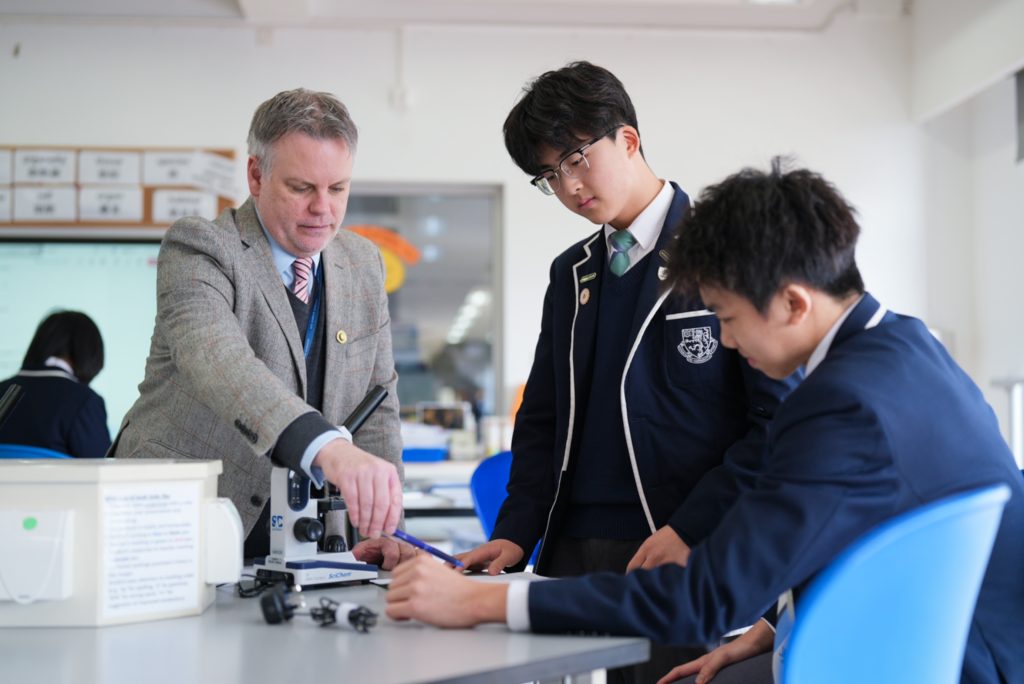
Physics learning gives students more than knowledge about how the world works; more importantly, it helps them develop effective ways to solve problems. During experiments, we do not simply provide students with the answers. Instead, we encourage them to find solutions independently. For example, when a light bulb does not turn on, students need to check the connections, test different possibilities and gradually identify the cause. This process of continuous testing, analysing and improving helps children develop strong problem-solving skills.
Physics also teaches students how to break complex problems down into smaller, more manageable parts and find solutions based on fundamental principles. At the same time, it helps children develop resilience, because experiments do not always go as expected. Learning from mistakes, adjusting approaches and improving solutions are all essential parts of scientific exploration.
Chemistry | Dr Sharples
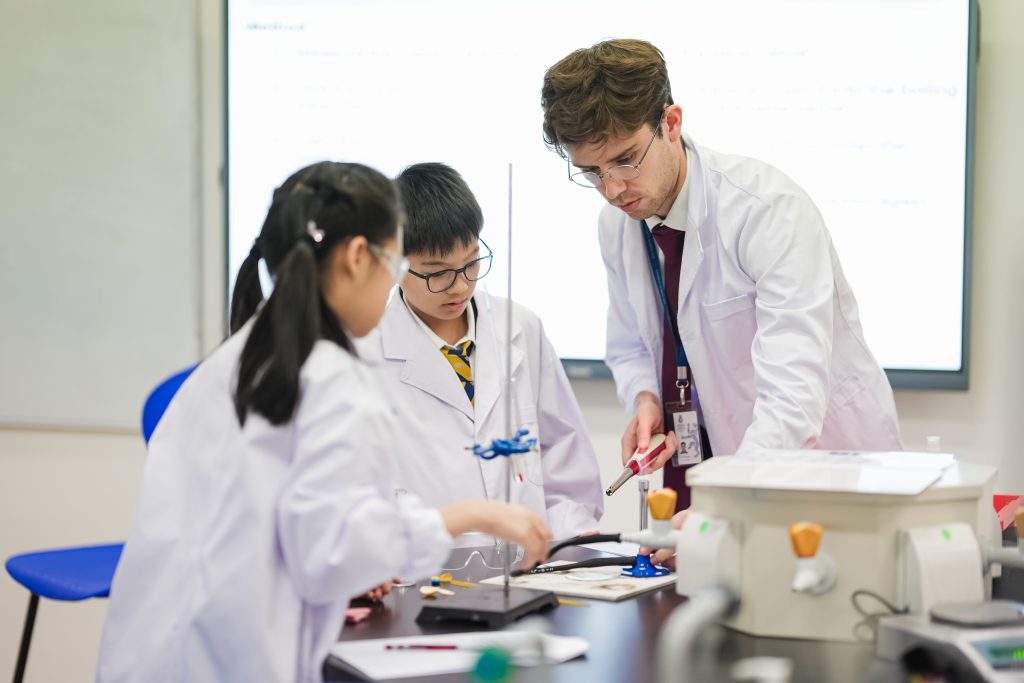
Chemistry helps children understand that the seemingly complex world around us can be explained through scientific models and fundamental principles. During experiments, students do not simply learn to observe results; more importantly, they learn to build connections between observations and theories. They constantly ask: Why does this happen? What scientific principles explain this phenomenon?
For example, when Year 7 students explore energy release through burning food, they may initially be amazed by the question, “How can a small piece of crisps release so much energy?” As their learning develops, they begin to understand the same experiment from deeper perspectives, including chemical bonds and energy transfer. Science learning is a journey that helps children move from observing phenomena to understanding the principles behind them.
Biology | Mr Fraser
Biology learning helps children become more careful observers. Students learn to identify patterns, ask questions, gather evidence and draw conclusions from their observations. For example, when a child notices leaves changing colour in autumn, they may ask, “Why does this happen?” Starting from a simple question, children gradually learn to explore answers through scientific methods. Biology not only helps children understand life, but also develops the scientific thinking skills needed to understand the world and analyse problems.
The true value of Science learning lies not only in acquiring knowledge, but also in developing the ability to analyse problems, test ideas and solve unfamiliar challenges. These ways of thinking will support children throughout their lifelong growth.
If a Child Does Not Plan to Study Science in the Future, Why Is Science Still Important?
Q: Many parents believe that Science is only important for children who plan to pursue STEM subjects in the future. Looking at Science Education from the perspective of a child’s lifelong development, beyond scientific knowledge itself, what abilities and perspectives can it help children develop that will benefit them throughout their lives?
Physics | Mr Gora & Mr Rodger
Physics develops far more than students’ understanding of how the world works; it cultivates a way of observing the world and analysing problems. Students who study Physics naturally learn to ask: “Why does this happen?” and “How can we test whether an idea is correct?”
This way of thinking is valuable far beyond the classroom. Whether it is evaluating the accuracy of information in the news, understanding new technologies, or solving practical problems in everyday life, the analytical skills and critical thinking developed through Physics can be applied widely. Many Physics students go on to pursue diverse fields such as medicine, finance and economics. What employers value is not only their knowledge of Physics, but also the logical reasoning, modelling skills and ability to solve complex problems that they have developed through studying the subject.
Chemistry | Dr Sharples
Chemistry helps students understand that Science is not a fixed set of answers, but a continuous process of building, testing and refining ideas. Through Chemistry learning, students explore different scientific models and gradually understand that while models help us explain the world, they must also be adapted and improved when new evidence emerges. Students learn how to ask questions, analyse evidence and refine their understanding based on observations. This open-minded yet rigorous way of thinking benefits children regardless of the path they choose in the future, helping them analyse information, make informed decisions and navigate an ever-changing world.
Biology | Mr Fraser
Biology learning helps children understand the connections between life and the wider world. When studying ecosystems, plants and biodiversity, students not only gain scientific knowledge, but also begin to think about how humans can coexist with nature and protect the environment for the future. For example, when learning about photosynthesis, students may explore how future technologies could be inspired by the way plants absorb carbon dioxide and contribute to addressing climate change. Through this learning, children realise that Science is not only about discoveries in the laboratory, but also about addressing some of the most important challenges facing our global society.
Science is not exclusive to future scientists. It is an essential ability that helps every child understand the world, evaluate information and navigate future changes.
Science Education Is Never About Creating More Scientists
The value of Science Education is never limited to nurturing future scientists. Instead, it is about helping every child develop the ability to understand the world, analyse problems and solve challenges.
From curious exploration in Kindergarten to rigorous investigation in Secondary School, scientific thinking is woven throughout the learning journey of Harrow Shanghai students. Whether they choose future pathways in Life Sciences, Medicine, Engineering and other STEM fields, or pursue areas such as Economics, Politics, Business or the Humanities, the ability to explore, reason and think critically will become an essential foundation for navigating the future.
Looking at the university destinations of Harrow Shanghai graduates, students are using these skills to pursue opportunities at some of the world’s leading universities. Whether they have received offers to study Biology at Emory University, Medicine at the University of Cambridge, Politics at Imperial College London, Mathematics at the University of Toronto, or other disciplines, their future pathways may be different, but they share a common foundation: the scientific thinking and inquiry skills nurtured through their education at Harrow Shanghai.
The children who will truly thrive in the future are not simply those who acquire knowledge, but those who can ask meaningful questions, think independently and continue exploring the unknown.