My child is already doing well — how do you take them beyond the limit?
Every parent asks us this question. And the answer doesn’t live in a slogan. It lives in a classroom.
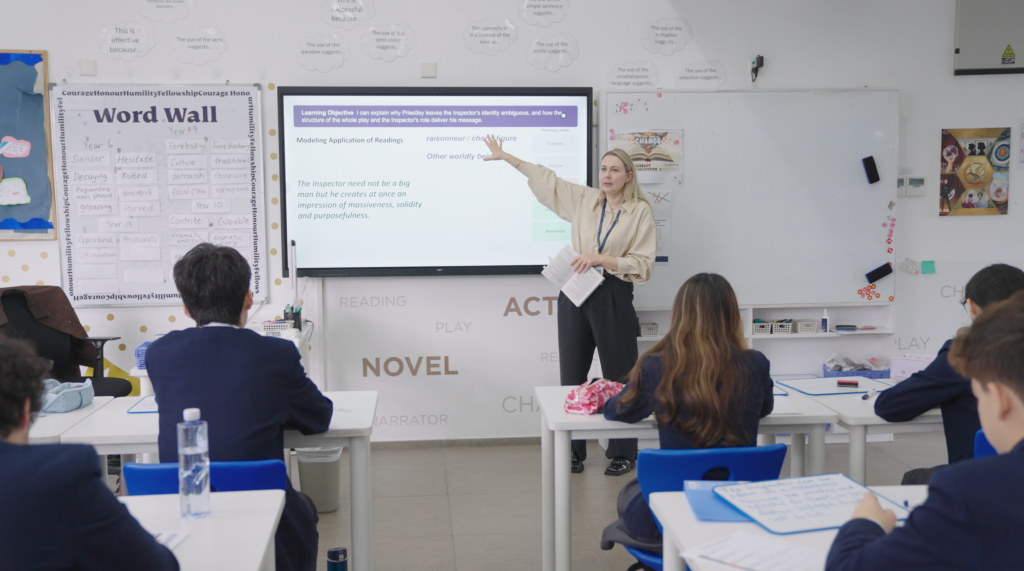
In an English classroom at Harrow Shanghai, two students and their teacher, Ms Rebeka Rangelov, made it clear in a single lesson:
Harrow doesn’t just teach. It stretches.
The words you use hold power
The first thing that feels different in a Harrow English lesson is vocabulary. We don’t stop at helping students “get their meaning across.” We push them to get it right.
Describing a character as “angry” and describing their language as “confrontational” or “accusatory” are two entirely different depths — the first stays on the surface; the second reaches into the character’s mind.
Eason remembers this vividly. What first pushed him past his limit wasn’t an exam. It was a set of advanced words his teacher gave him — far beyond his level at the time: denouement, foil, juxtaposition, patriarchy.
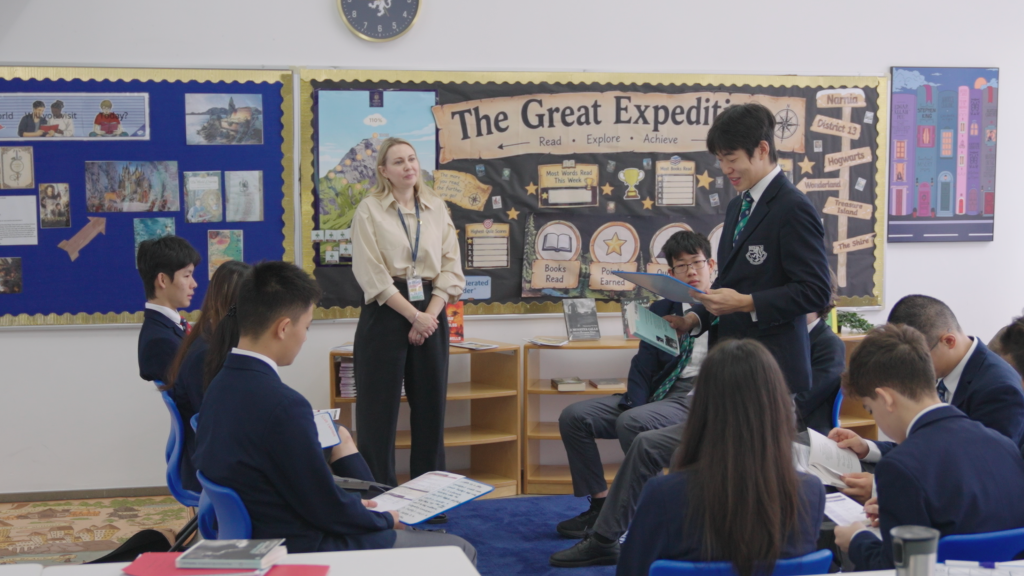
“Basic vocabulary allows me to describe ‘what happened’; with more advanced vocabulary, I can express exactly ‘what I want to say’. This is how I developed my skills in advanced argumentative writing. A richer vocabulary will also help me express my thoughts and feelings more precisely in my university application essays, allowing more of my personality to shine through.”
——Eason, Student
Behind this is a belief Ms Rangelov holds firmly: you only get one chance to make a great first impression, and the words you choose carry power. If a child can’t express themselves precisely, too much of what they think and feel stays locked inside.

Theory years above their age
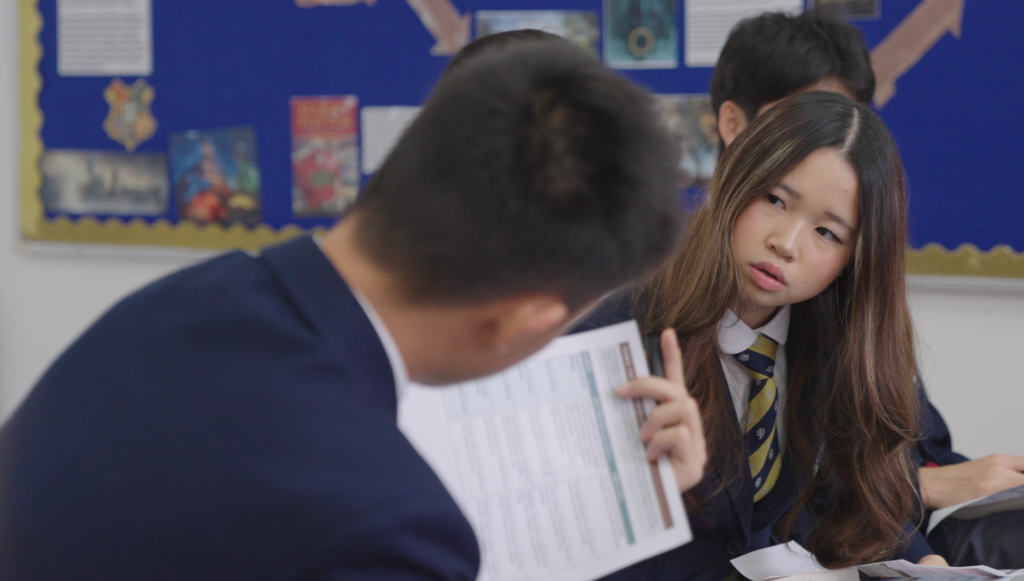
Harrow’s second point of difference is depth. We don’t wait until students reach A-Level to introduce them to A-Level thinking. While studying 《An Inspector Calls》, Ms Rangelov brought critical theory — typically introduced in Year 13 — into the classroom early. Using Marxist theory as a central framework, students explored social class and power and applied this lens to interpret the play.
For adults, this may simply be a teaching approach. For these students, it opened a new door. Eason recalled that, at first, there was a great deal of information to take in. But after studying the theory, he realized: “It helped me understand why certain things happen and the reasons behind them.” Iris put it just as well:
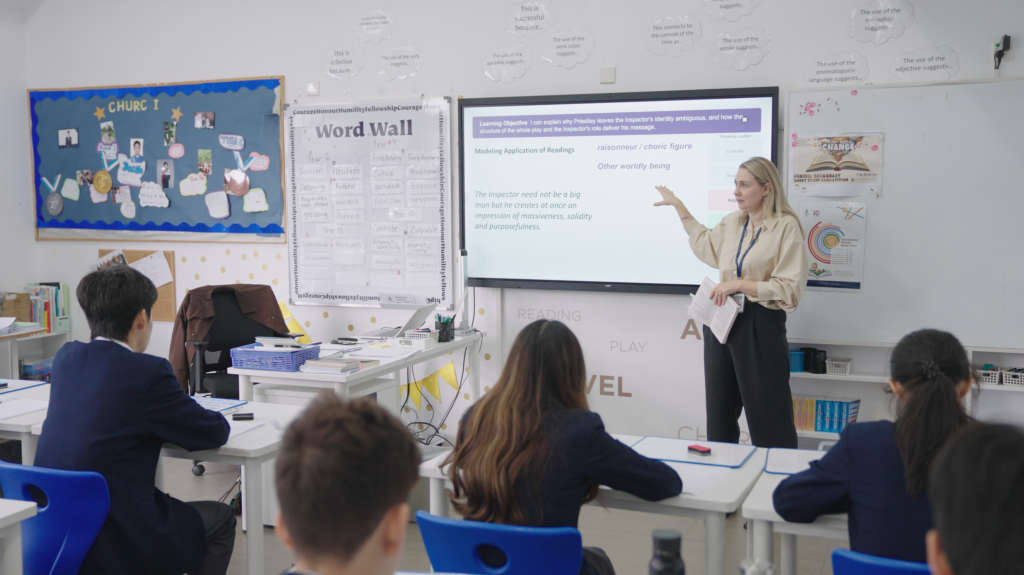
“From that point on, the way I looked at the characters in the play changed completely. I started examining every detail, thinking about the deeper meanings and more subtle ideas behind it all.”
—— Iris, Student
That’s exactly what we want to give our students: not just the ability to read a story, but the ability to see the logic behind it.
The feeling of being stretched
It’s worth acknowledging that being stretched isn’t always comfortable. That is precisely the point.
When students first encounter unfamiliar theories and vocabulary, they often feel confused. What does this word mean? How am I supposed to apply this theory? But beyond that initial uncertainty often comes an “aha moment” — when they suddenly see a familiar text in a new light, through the lens of the theory they have been studying.
Iris describes it beautifully: discovering another dimension of literary interpretation is unforgettable. For Eason, the experience began with trust and a sense of achievement, then grew into something even more valuable: determination.
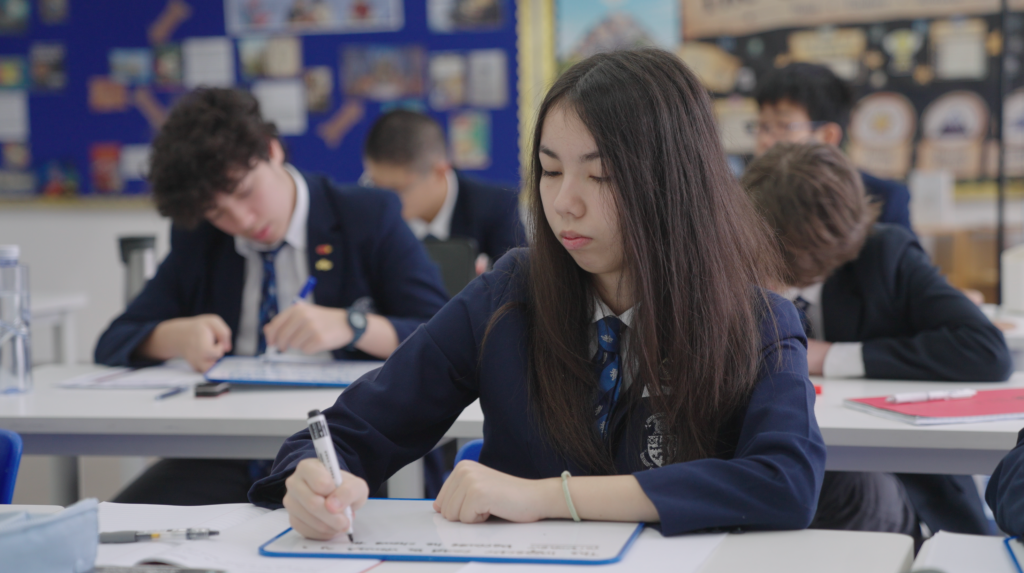
Educational research has long shown that when students work hard to master something, they become more deeply engaged because the struggle gives them the chance to think critically and independently. That is why Harrow’s approach is simple: even students who are already excelling deserve to be challenged, because their potential for growth is limitless.
We stretch our students in three ways:
- Introducing learning well beyond their current age level and teaching them at a more advanced level.
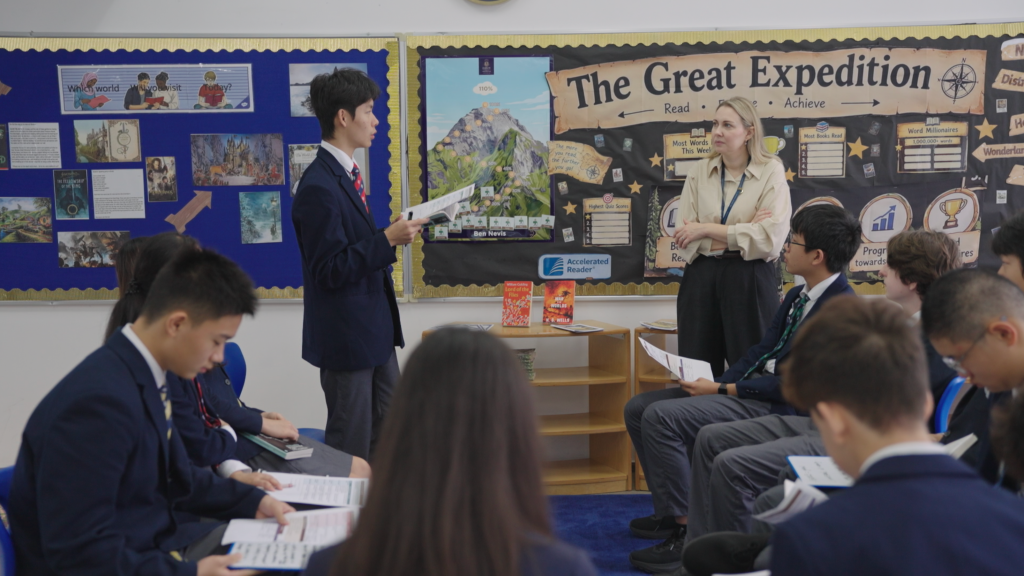
- Harnessing the power of discussion, engaging students in university-style seminars where they can put their learning into practice through spoken exchange.
- Providing a rich range of reading materials that deepen students’ understanding through academic language and ideas.
Beyond the Limits
The strongest students aren’t those who never struggle, but those who discover they can go further when challenged.
At Harrow Shanghai, we teach students
HOW to think, not WHAT to think