
“My child does mental arithmetic quickly, but freezes the moment a word problem appears.”
“If I rephrase a question, they suddenly can’t do it — does that mean they haven’t learned it properly?”
“Should we just do more practice to build up fluency?”
Almost every parent has found themselves puzzled by questions like these about their child’s maths. And the answer often lies not in how much they practise, but in an earlier step — whether the child has truly “understood” the problem in front of them. With these questions in mind, we spoke to Ms Jade Honey, Deputy Head of Lower School and Phonics & Maths Specialist at Harrow Shanghai.
Jade Honey——Deputy Head of Lower School
Ms Honey began her teaching career in the UK, where she worked as a primary teacher and MFL Coordinator before moving to China in 2021, where she continued to develop her leadership experience in international education.
She holds an LLB in Law, First Class with Honours, from Lancashire Law School, a PGCE with QTS in Primary Education (Mathematics Specialism) from Edge Hill University, and an MA in Educational Leadership from the University of Nottingham. She has also completed the National Professional Qualification for Senior Leadership, the International Professional Certificate in School Leadership, and Level 3 Safeguarding Training.
Jade believes a school should be a place where every child is “seen, supported and encouraged to do their best”—and it all begins with strong relationships and clear, honest communication.

Children can calculate, but struggle to think mathematically? The problem starts at the first step
Jade’s answer is direct: “A correct answer does not always show how well a child understands.”
A child may have memorised the standard procedure for a particular question, yet be at a loss the moment the question is phrased differently. Where does the difference lie? In whether they have merely “memorised the steps”, or truly “understood the concept behind them”.
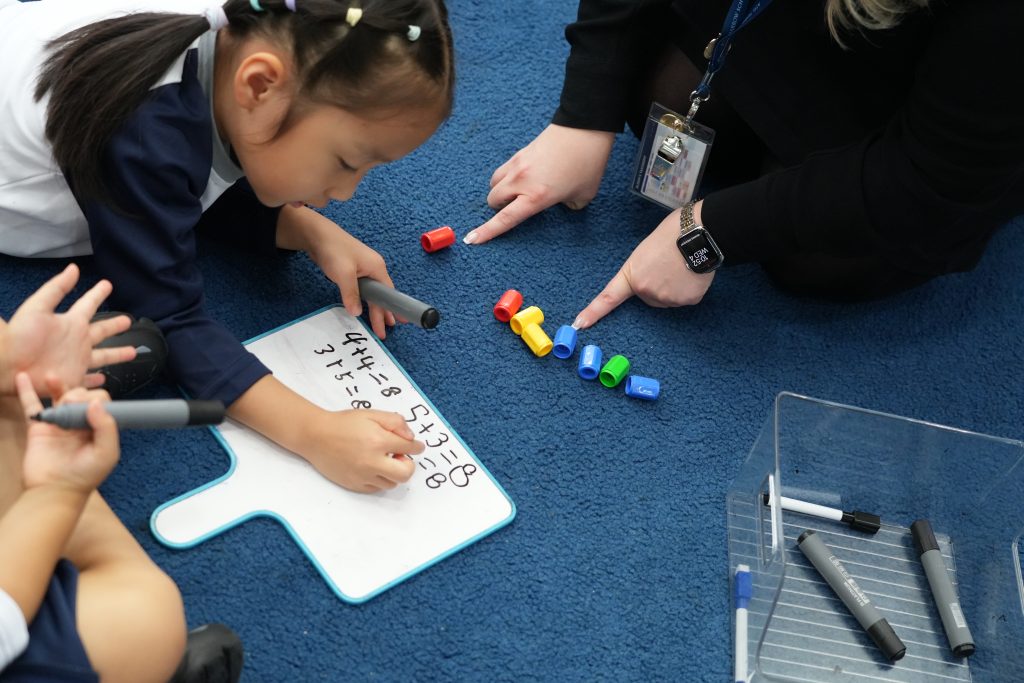
And to make that understanding genuinely happen, Harrow Shanghai uses an approach called CPA (Concrete–Pictorial–Abstract) — “concrete, pictorial, abstract”. It may sound technical, but in practice it is wonderfully simple: first with hands, then with pictures, and only last with symbols.
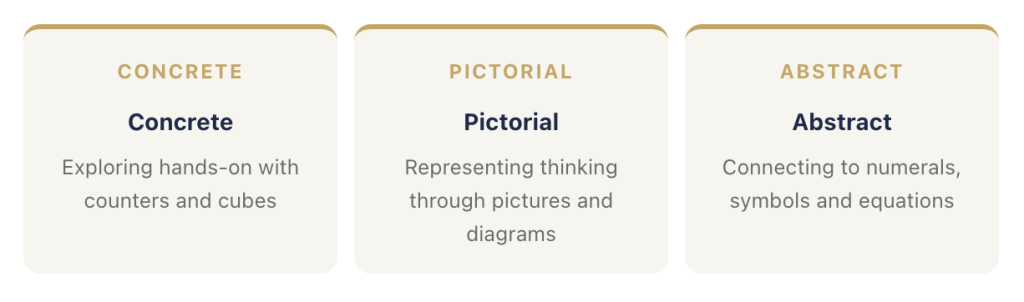
Take 5 + 3 = 8 as an example: a Year 1 child will first combine five counters with three counters, seeing with their own eyes how the “8” comes about; then they draw it using a picture or a “part–whole” model; and only then do they record the number sentence.
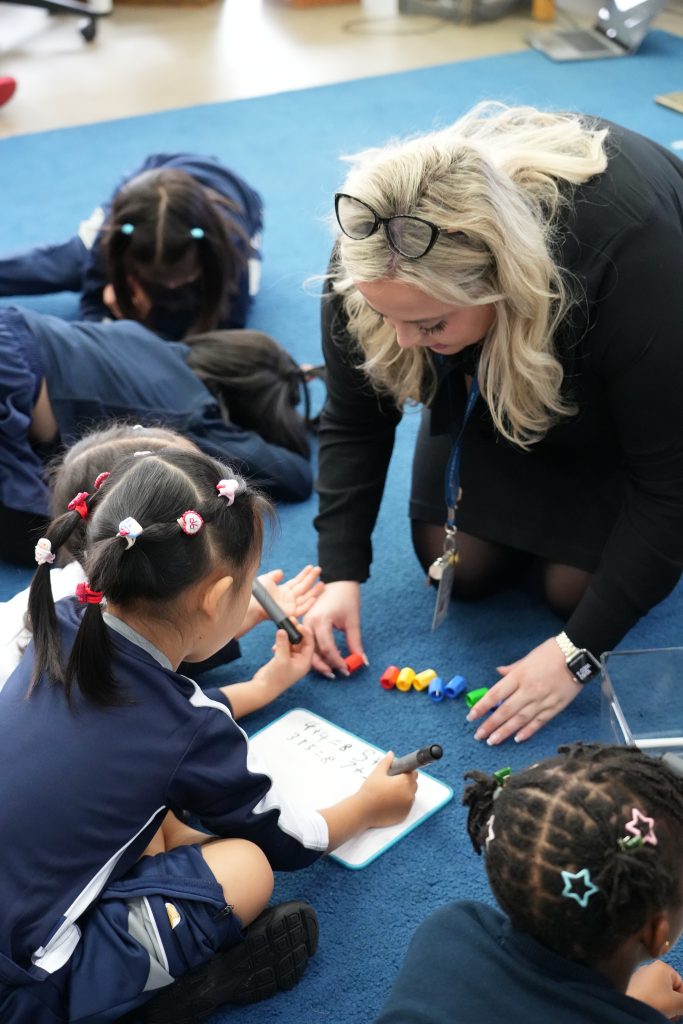
By Year 4, the same approach supports more abstract concepts such as equivalent fractions — using fraction strips, drawing a bar model, and then explaining why one half is equivalent to two quarters.
Children can move freely between equipment, pictures and symbols whenever it helps. Jade explains that these hands-on resources remain valuable throughout the Lower School, because they make abstract mathematical relationships “visible”.
Why does “explaining clearly” matter more than “getting it right”?
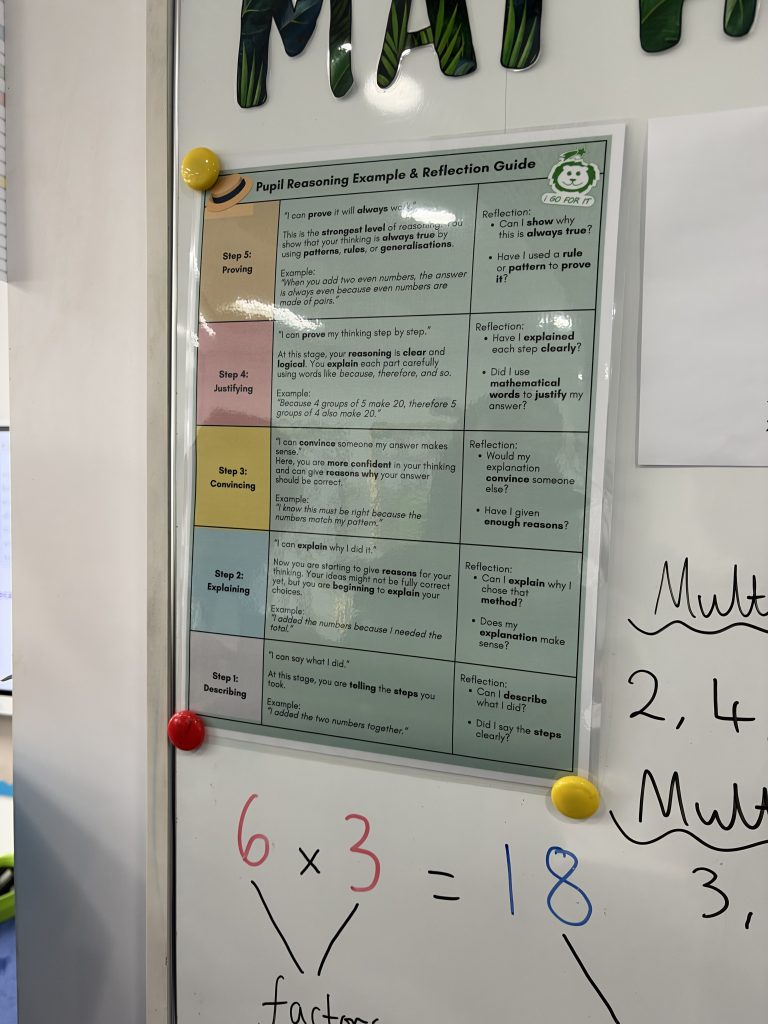
Because only when a child is asked to explain their own thinking can a teacher judge whether that understanding still holds when the question changes. Jade encourages parents to ask three questions at home —
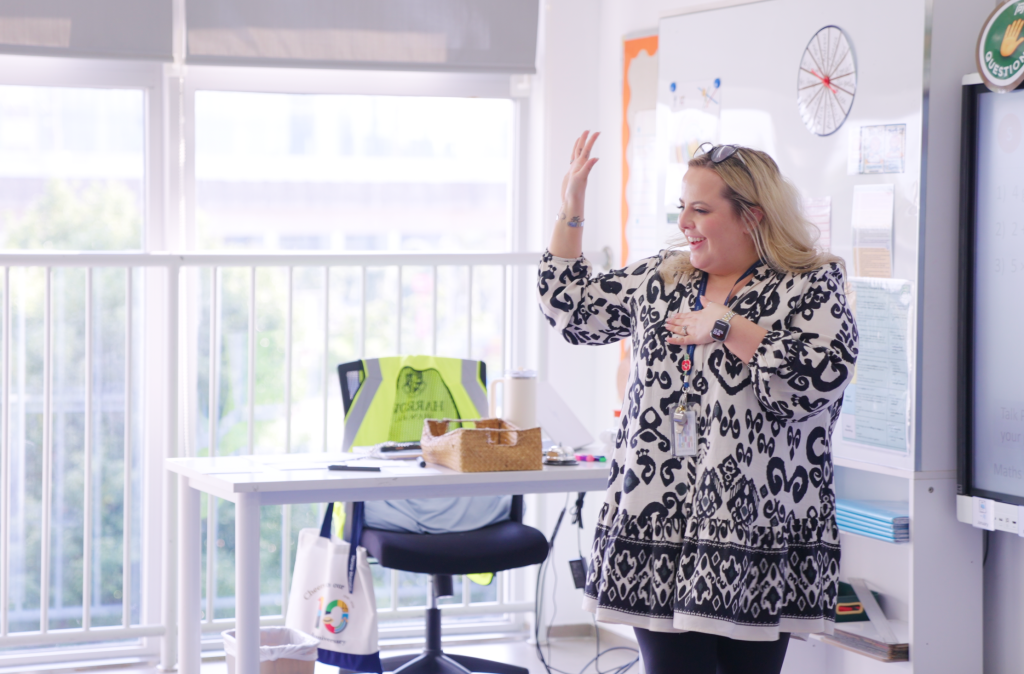
Three questions every parent can ask
“How do you know?” —
drawing out the thinking, not the answer;
“Can you show me another way?” —
testing whether the understanding is flexible;
“Does that answer make sense?” — building judgement, not blind calculation.
These three questions develop both fluency and reasoning — they are never an either-or, but two things that support one another.
A “fence” problem that shows how children really think
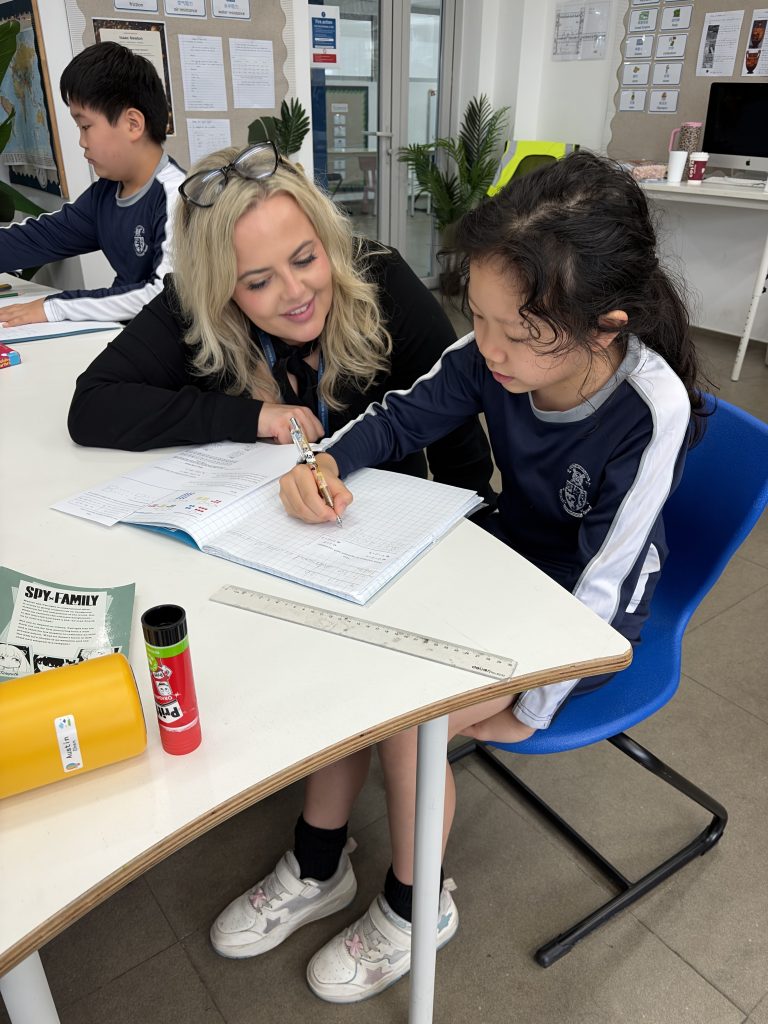
If the idea still feels abstract, this real Year 4 classroom example shared by Jade makes it concrete:
“We ask children to design different rectangular gardens using the same length of fencing, and then investigate: do all these gardens have the same area?”
Using practical equipment or squared paper, children explore possibilities, record their findings and compare results. The real stretch comes in the question they must explain: Why does keeping the perimeter the same not necessarily keep the area the same?
A single question develops calculation, spatial reasoning, systematic working and communication all at once. Children are testing ideas, comparing evidence and justifying their conclusions — skills they can use in another subject, in another context, just the same. This is what Jade repeatedly refers to as “transferable skills”.
When it comes to “stretching”, how do we avoid “pulling up seedlings”?
How to stretch children who are ready for more is another common question. Jade’s answer: real stretching means deepening thinking, not making questions harder or more numerous.
① The AISL pilot: greater challenge for Year 3
A project called the AISL pilot is currently taking place in Year 3. It begins with Unit 1, “Place Value”, and draws on Year 4 content, while also looking to the Chinese National Curriculum (CNC) and the Hong Kong curriculum to explore opportunities to accelerate learning and provide greater challenge.
But Jade stresses an important precondition: all of this rests on secure conceptual understanding. “We are looking closely at how children respond to this level of challenge — their understanding, their explanations and the support they need. This will guide our future curriculum planning.”
② Chilli levels: just the right challenge for every child
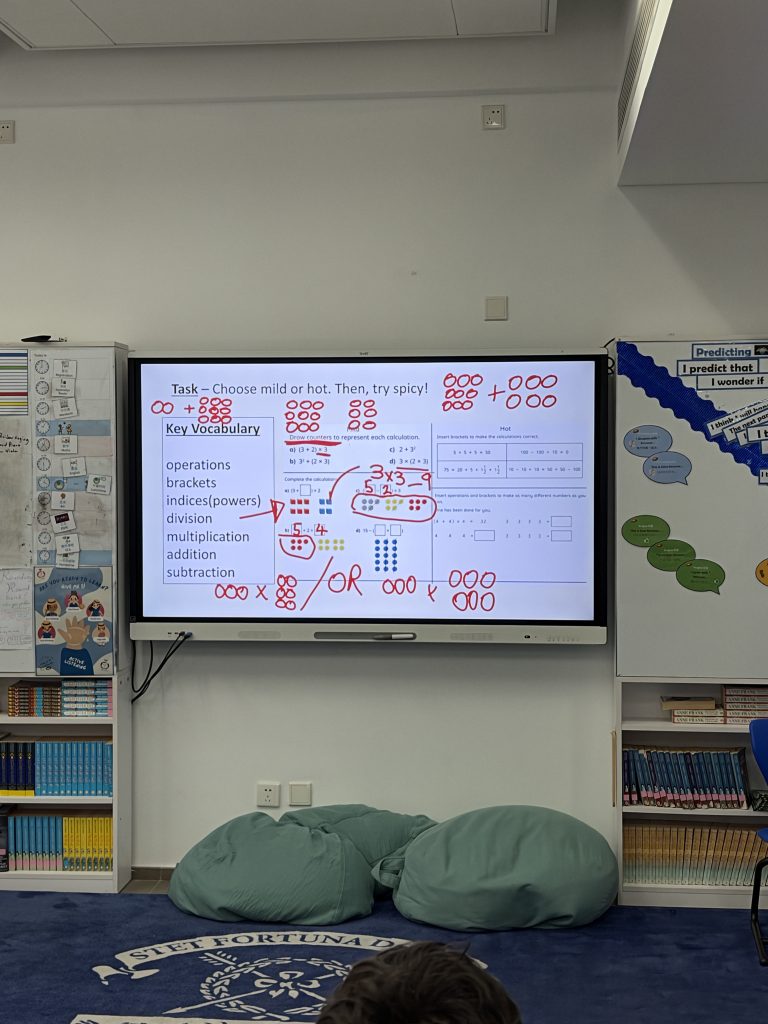
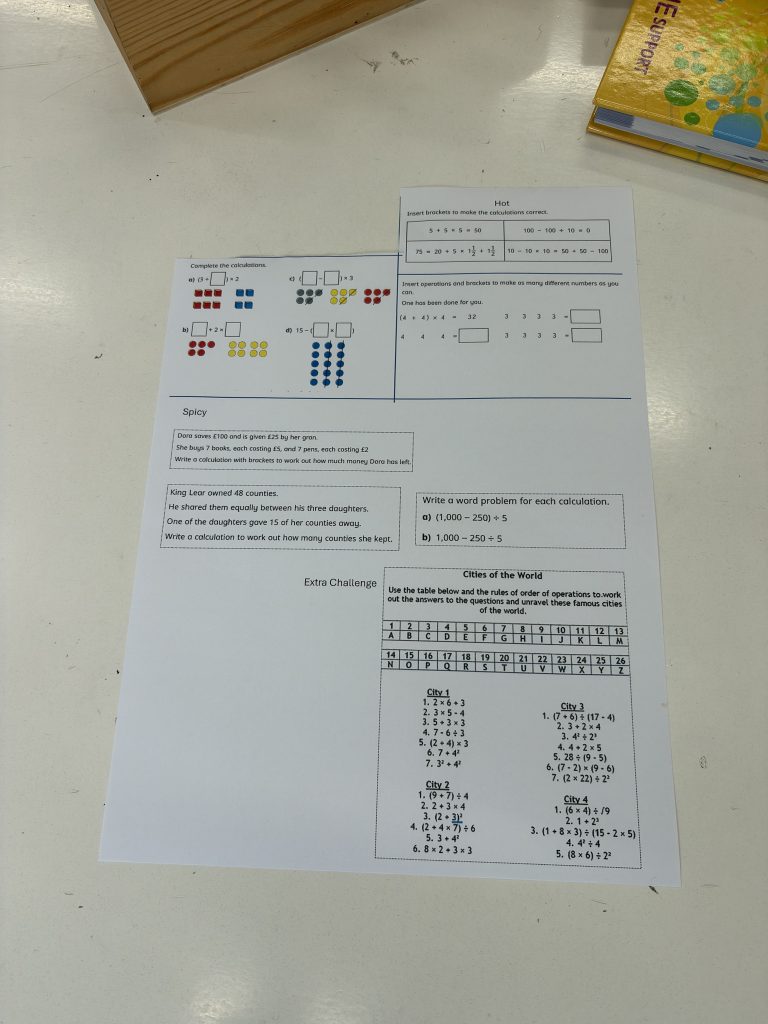
In their homework, children will see the familiar “chilli levels” — three levels of challenge built around the same learning:
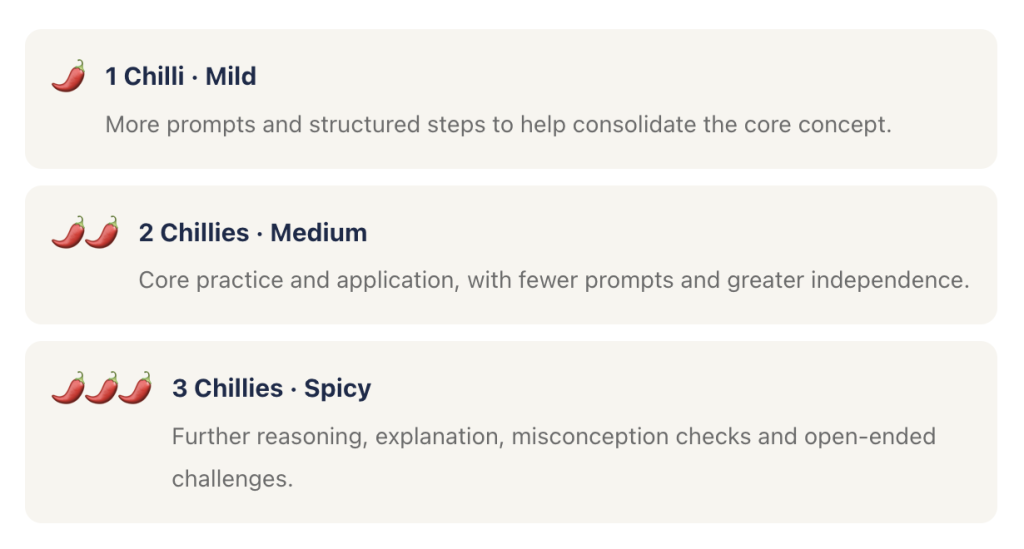
The key is that these levels remain flexible — “a child may need support in one area, yet be ready for considerable challenge in another.” Teachers use questioning, discussion and children’s work to judge whether a child needs explanation, practice, or greater depth at any given moment.
③ Maths competitions: are they worth taking part in?
On external competitions such as FOBISIA, Jade’s thinks their value lies in giving children the chance to step beyond the regular classroom, face unfamiliar challenges, and engage with pupils from other schools; the process of preparing and taking part is itself a way to build perseverance, communication, and the ability to respond to challenges.

💡An honest reminder
At primary age, Jade prefers to see these experiences as a starting point for nurturing interest, confidence and curiosity, rather than dressing them up as “a direct advantage for university applications”. Their real role is to help children discover interests and build habits that stay with them throughout their education.
What does ideal maths learning look like?
In Jade’s view, by the time a child moves up to the Upper School, the ideal is for them to see themselves as a “capable mathematician”: with secure number knowledge, fluent calculation, and a calm confidence when facing unfamiliar problems.
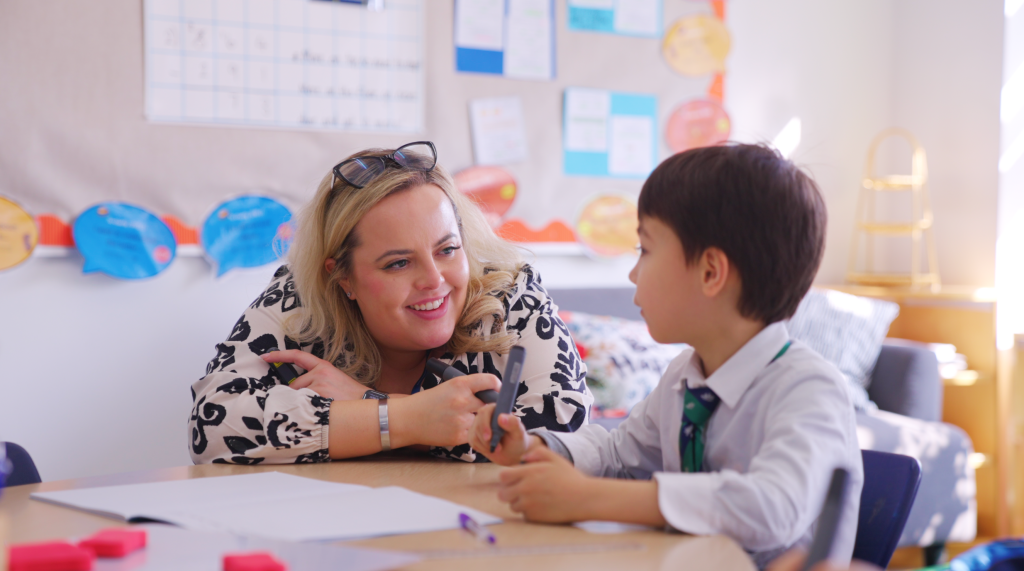
They can choose an appropriate strategy, explain why it works, judge whether an answer is reasonable, and adapt their approach when necessary; they can recognise connections between different areas of maths and apply their learning in everyday life.
More precious than ability is attitude: the courage to ask questions, learn from mistakes, and persevere when the answer isn’t immediately obvious. When a child knows they have strategies to draw on and can identify a useful next step, confidence grows little by little.
In closing
So, back to the question we started with —
“They can calculate, but struggle to think mathematically— where are we going wrong?”
Perhaps the problem lies in the question itself.
Children have always been able to think. But we have become so used to asking, “Is the answer right?” that we rarely stop to ask, “How did you work that out?”
It is when children are given the opportunity to express their thinking that their ability to think truly begins to flourish.