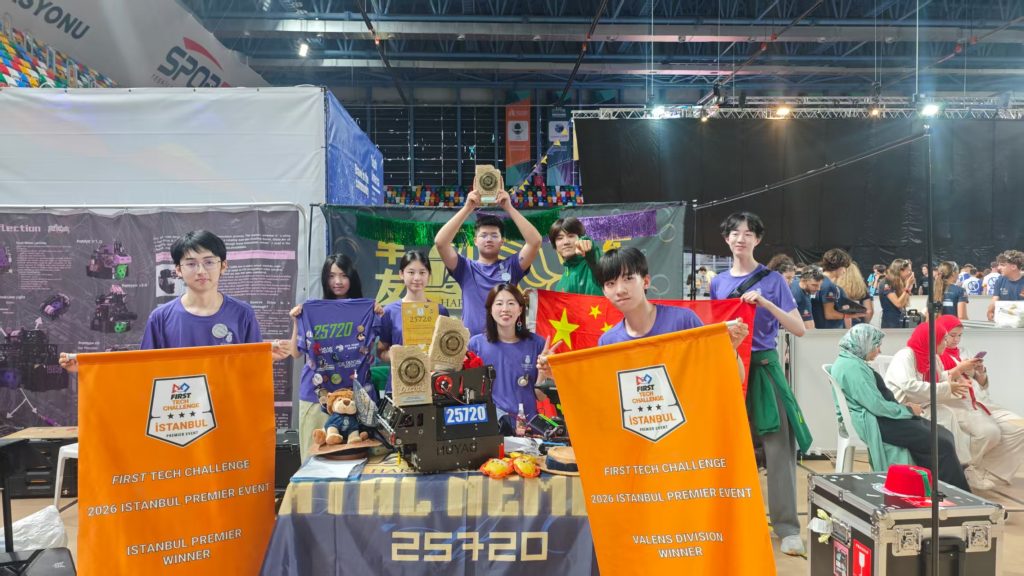
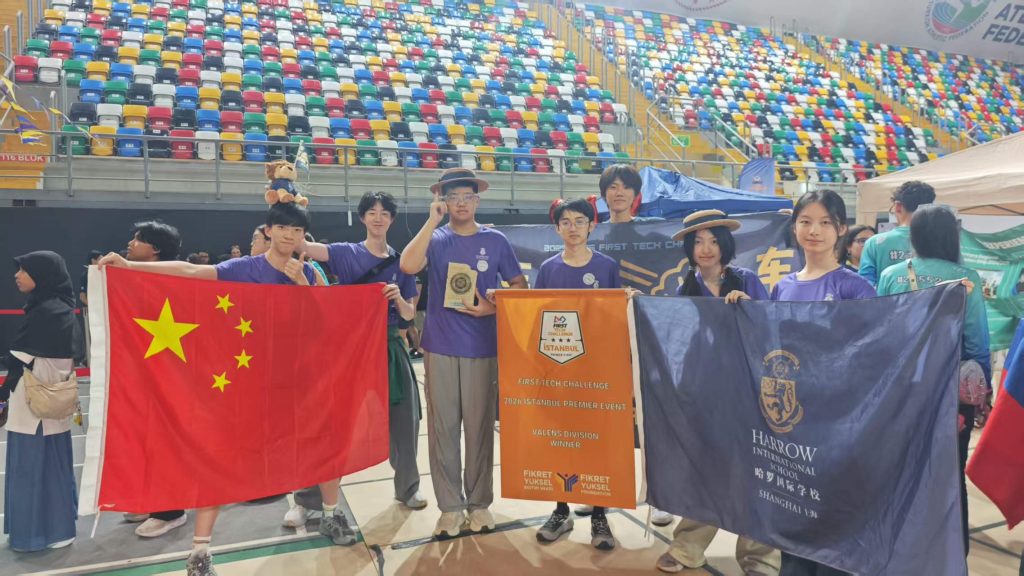
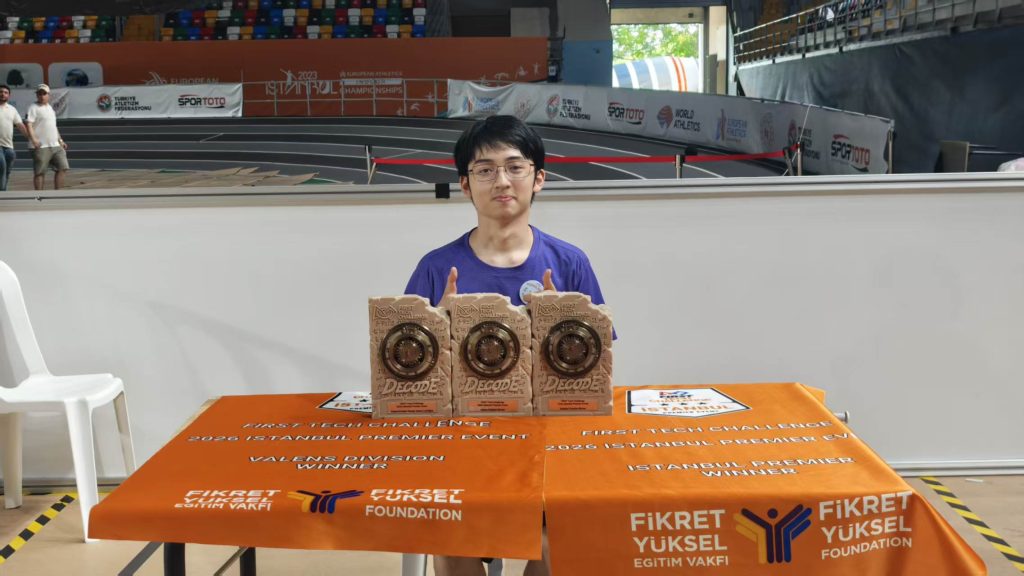
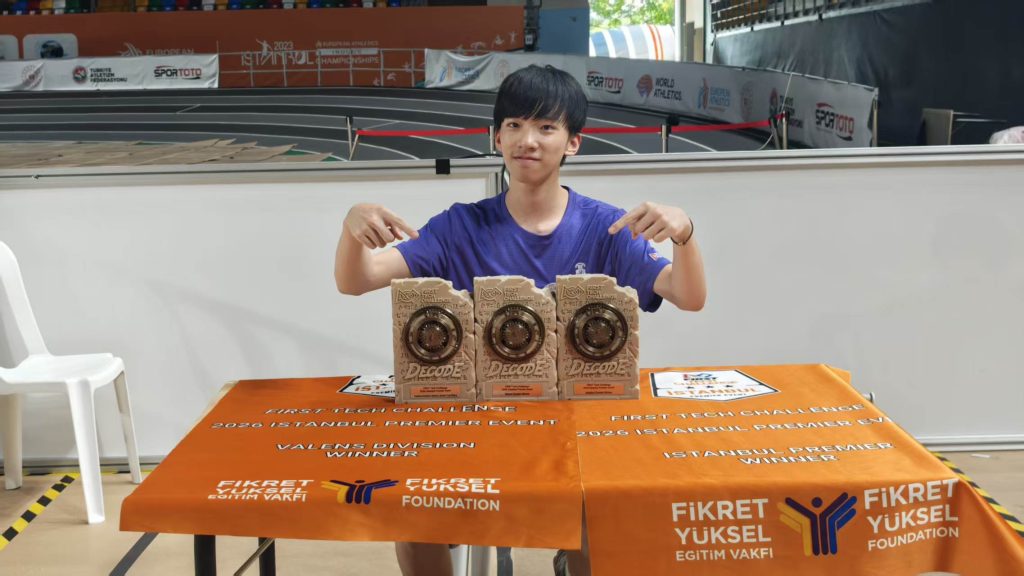
During the 2025–2026 FTC season, Harrow Shanghai’s Team 25720 FATAL NEMESIS embarked on a remarkable championship journey from regional competition to the global stage. Advancing from the Beijing Regional Qualifier to the China Championship, and ultimately to the FTC Premier Event in Türkiye, the team battled fiercely against some of the strongest teams from China and around the world. Along the way, they overcame formidable opponents, including leading domestic teams such as Shanghai High School International Division (SHSID), before rising to the top of the global competition stage and securing three prestigious honours:
🏆 FTC Premier Event Overall Champions
🏆 VALENS Division Champions
🥇 VALENS Division Design Award – 1st Place
Established just two years ago, the team has completed an incredible journey from building its foundations from scratch to reaching the pinnacle of the global competition stage! Today, through the story of this remarkable team, let us explore how Harrow Shanghai’s ECA programme empowers the creators and innovators of tomorrow.
Part 1|The Journey to the Global Stage
What is this global competition?
First Tech Challenge: FTC is one of the world’s largest robotics competitions for secondary school students, organised by FIRST, a renowned US-based non-profit organisation. Each year, approximately 250,000 students from around the world take part in the competition, which reaches multiple countries and regions globally.
FTC Premier Event: At the very top of the FTC pyramid is the FTC Premier Event, an elite international invitational competition. Standing alongside the FIRST Championship, it represents one of the highest levels of competition within the FTC ecosystem. Only the most outstanding teams from around the world, who have secured qualification through regional pathways, earn the opportunity to compete on this prestigious stage. The FTC Premier Event in Türkiye brought together 74 top teams from more than 20 countries and regions, including China, the United States, Romania, France and Poland.
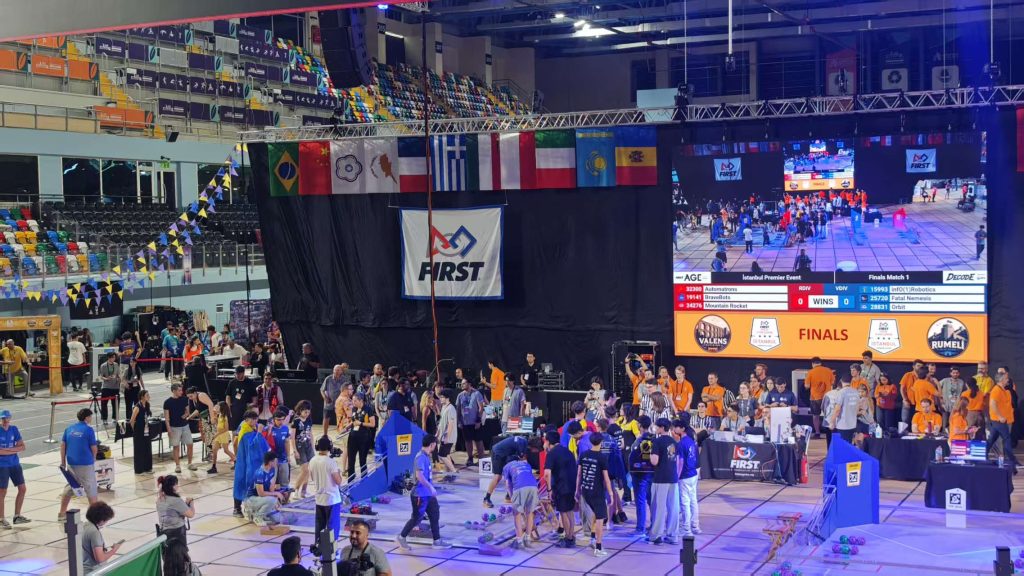
For Chinese teams, reaching the international stage requires progressing through a rigorous three-tier qualification pathway: Regional Qualifiers → China National Championship → International Premier Event. At each stage, teams compete against the strongest opponents and face increasingly demanding challenges. Team 25720 FATAL NEMESIS followed this exact journey — advancing step by step through each level of competition and ultimately reaching the pinnacle of the global FTC stage.
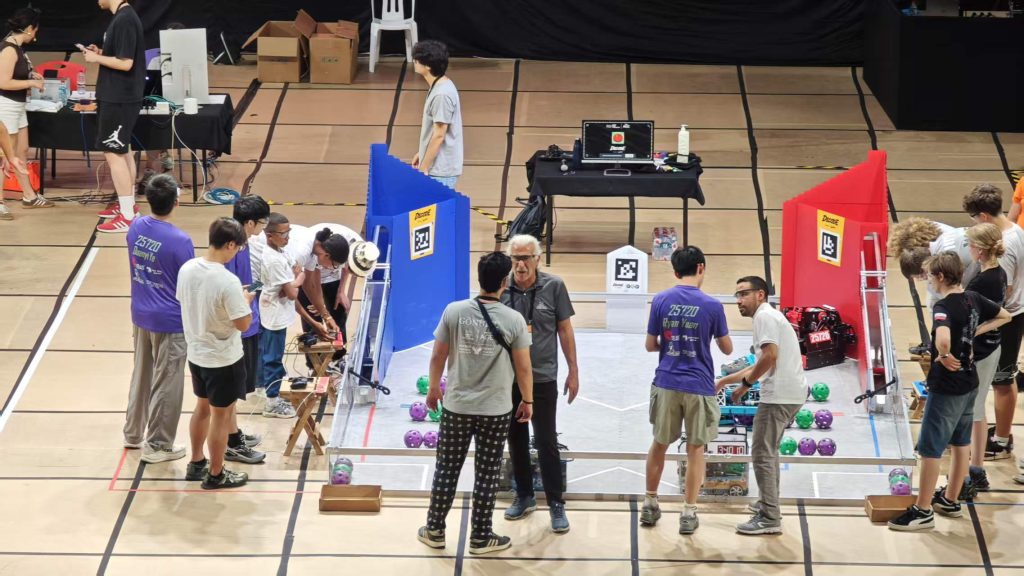
According to Luna, the team’s supervising teacher, FTC is far more than a robotics competition focused solely on operating machines. Instead, it is a comprehensive and highly demanding challenge that tests students’ abilities across multiple areas. Each September, a new FTC challenge is released, and teams have less than three months of initial preparation time to design, build, programme and integrate a robot from scratch. As the season progresses, both mechanical structures and programming algorithms must be continuously refined and improved. Many students remain involved from Year 6 through Year 12, experiencing different challenges and objectives every season. For long-term participants, each new competition cycle represents another opportunity to go through the complete process of developing a robot from 0 to 1. This repeated experience provides invaluable training in interdisciplinary problem-solving, engineering application and long-term project management.
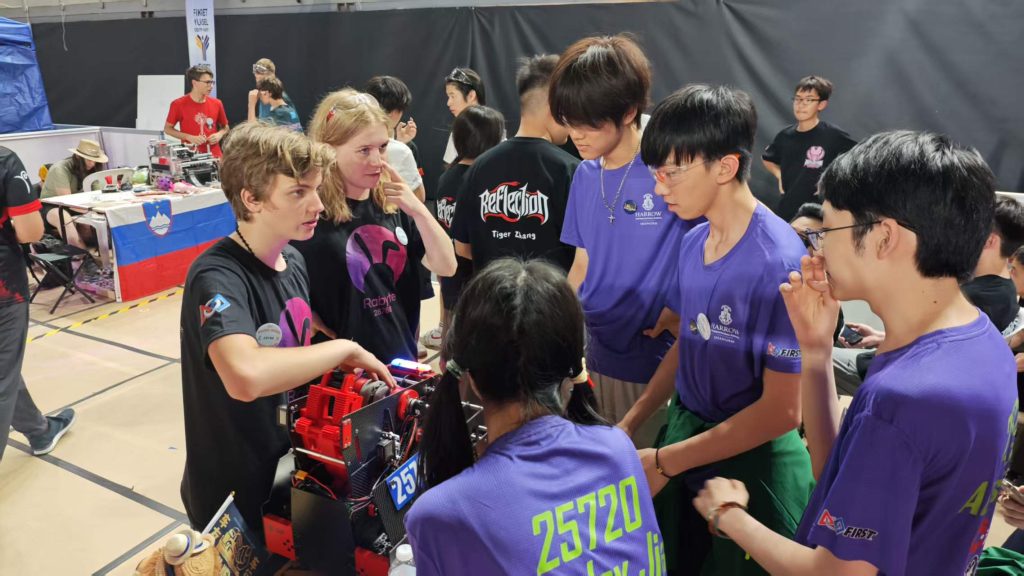
Beyond engineering and programming, FTC also challenges students in strategic thinking, real-time decision-making and team operations. The way a team functions is remarkably similar to a start-up company: members bring diverse skills and backgrounds to the team, with some focusing on mechanical design and engineering, while others taking responsibility for business outreach, branding and other non-technical roles. Everyone plays an essential part, working collaboratively towards a shared vision and contributing to the team’s overall strategy and success.
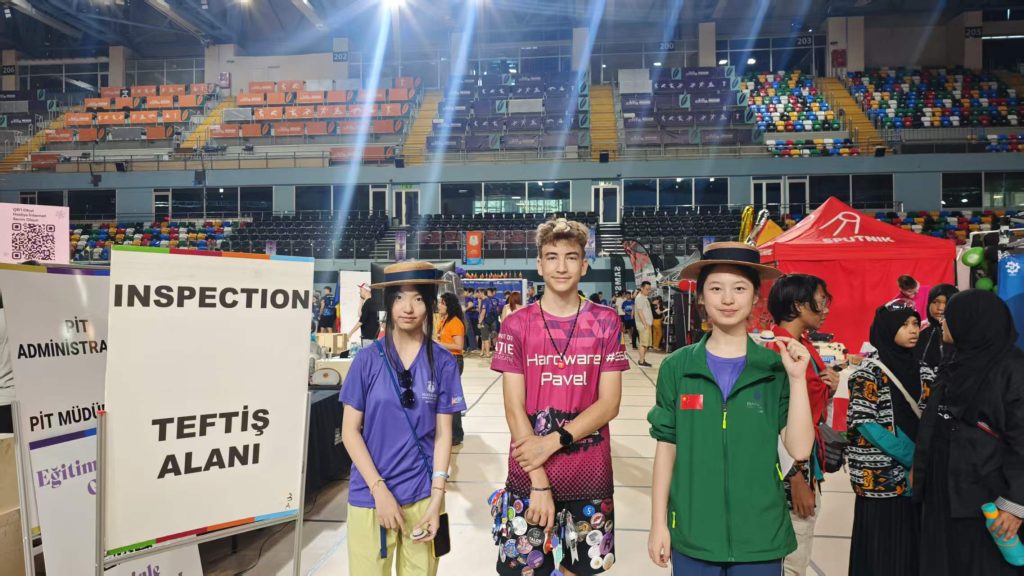
This is what truly sets FTC apart: it is not simply a robotics competition, but a transformative platform that empowers students to become the engineers, entrepreneurs and leaders of the future.
Part 2|What Makes It Truly Special
A Truly Student-Led ECA!
At Harrow Shanghai, many ECA clubs are founded and led independently by students. Team 25720 FATAL NEMESIS is a perfect example — it was initiated and established by three students, Austin Z., Rocky X. and Charlie W., who independently proposed the idea and applied to create the team.
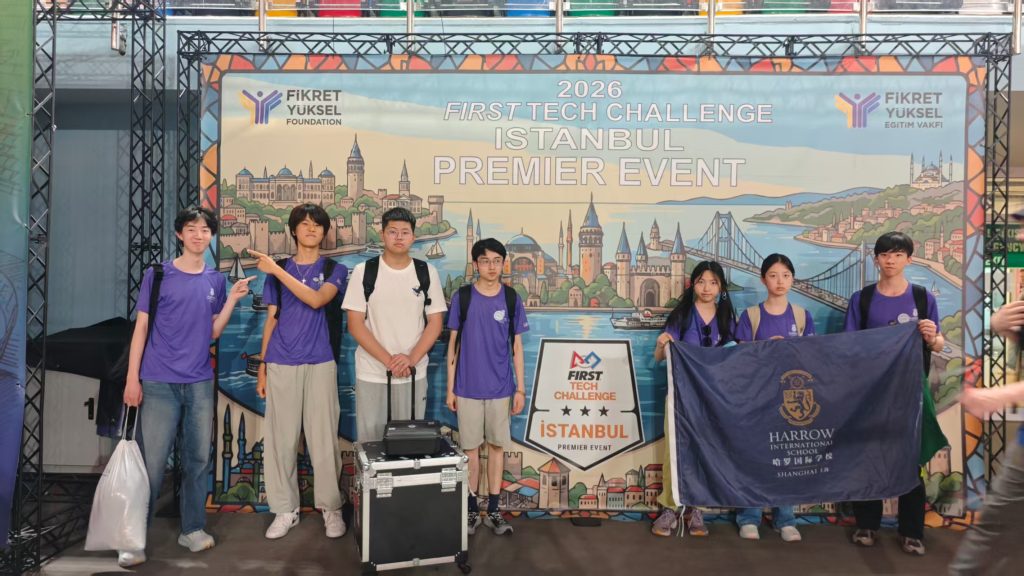
Austin Z. ——Team Founder & Captain
“I started the school’s FTC club when I was in Year 11,” Austin explains. “At the time, I was competing through an external robotics club. After each competition, I would share my experiences with classmates, and many of them were interested. However, there was no one at school who could teach them how to design, test, troubleshoot or compete with a robot.” Inspired by this opportunity, Austin decided to establish Team 25720 FATAL NEMESIS in 2024.
Throughout the season, Austin took on multiple roles within the team. As the founder, he led the initial recruitment process and helped build the team’s foundations. As captain, he set seasonal goals and coordinated collaboration between the hardware, software and business teams. As the lead robotics designer, he oversaw the 3D structural design of the robot. As a competition driver, he also played an active role in operating the robot during matches.
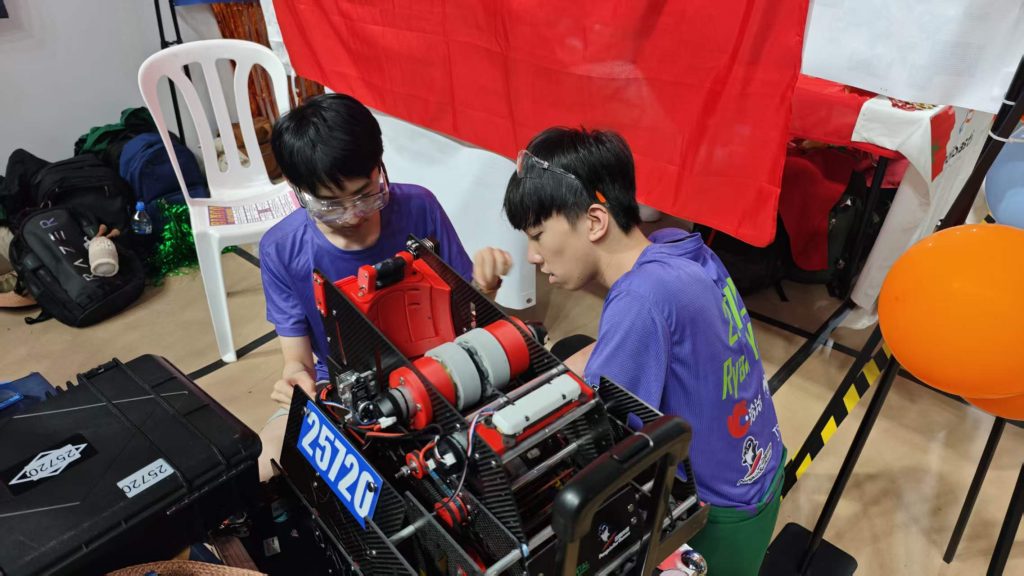
Throughout the ten-month preparation period, the team faced multiple challenges. At the beginning of the season, two different approaches emerged within the team regarding the robot’s launching system. One side proposed a three-motor launching structure to achieve more stable output, while the other hoped to save motors for the turret system to improve aiming flexibility. Austin did not directly reject either side. Instead, he led the team in a rational comparison of the strengths and weaknesses of both solutions, combining the advantages of each approach to refine the first prototype. “We gradually changed our mindset as well. We no longer saw debugging failures as unexpected mistakes, but instead viewed them as problems that needed to be solved.”
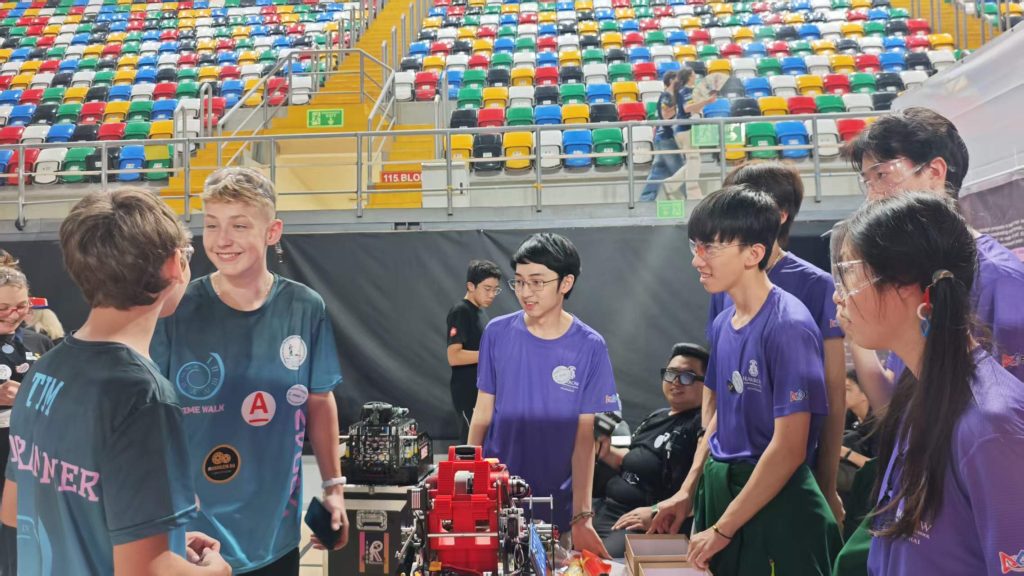
During the Beijing Regional Qualifier, the robot suddenly lost connection to its main control board, causing the entire system to shut down. The whole team remained calm under pressure and carried out on-site troubleshooting, identifying that the issue was caused by a thin solder layer on the XT30 power connector, which led to a break in the connection. They re-soldered the connector and reinforced it with hot glue, completely eliminating the potential risk.
During the practice matches at the FTC Premier Event in Türkiye, intense competition caused the battery to become detached. The mechanical and operation teams immediately conducted simulated impact tests, repeatedly optimising the fixing structure to ensure flawless performance in the following elimination rounds.
“The biggest lesson I gained was developing the ability to improve through failure,” Austin reflected. “One month before the competition, we encountered new issues almost every time we trained. But it was these failures that pushed us to examine every detail more deeply. I also learned to trust my teammates — at the beginning, I took on almost all of the key decisions myself. Later, I realised that only by allowing every team member to take ownership of important responsibilities could the team move further together.”
Ryan Y. ——Community Outreach Lead
Beyond technical development, Ryan was responsible for the team’s domestic and international community outreach efforts. “We have always actively participated in online technical sharing sessions and cross-team exchanges within the global FIRST community,” Ryan explained. “During the Türkiye competition, we proactively connected with more than 40 overseas teams at the venue and exchanged contact details. Three of these teams have since established support partnerships with us for the new season, including sharing initial design ideas and providing technical support throughout the development process.”
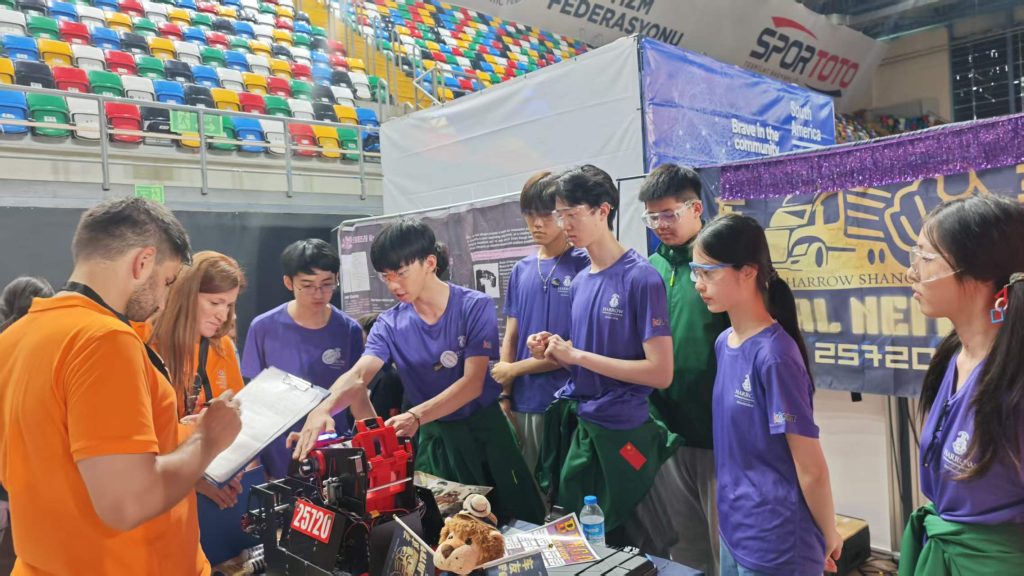
Beyond technical research and development, Ryan’s responsibilities also included corporate outreach and in-depth partnerships. He connected with companies to secure funding and material sponsorships, organised visits to technology companies and factories, and invited engineers to share technical insights with the team. At the same time, the team provided exposure opportunities for partner brands through competitions and promotional activities, connecting businesses with the youth innovation community and creating mutual value.
“Internally, the experience and industry resources shared by overseas teams have helped us strengthen our technical skills and improve our team management. Externally, we hope to share the energy of youth innovation and technology, moving beyond competition results to build a broader network for technological exchange.”
Reflecting on his growth, Ryan shared: “The physics and mathematics knowledge from textbooks truly came to life through robotics. The intense preparation process and unexpected situations during competitions pushed me to grow quickly in time management, team coordination and adaptability. This experience has also influenced my future plans — I don’t just want to focus on technical expertise; I hope to become someone who can excel in engineering while also collaborating effectively with others.”
Part 3|From Robotics to Endless Possibilities——How Does Harrow ECA Empower Future Creators?
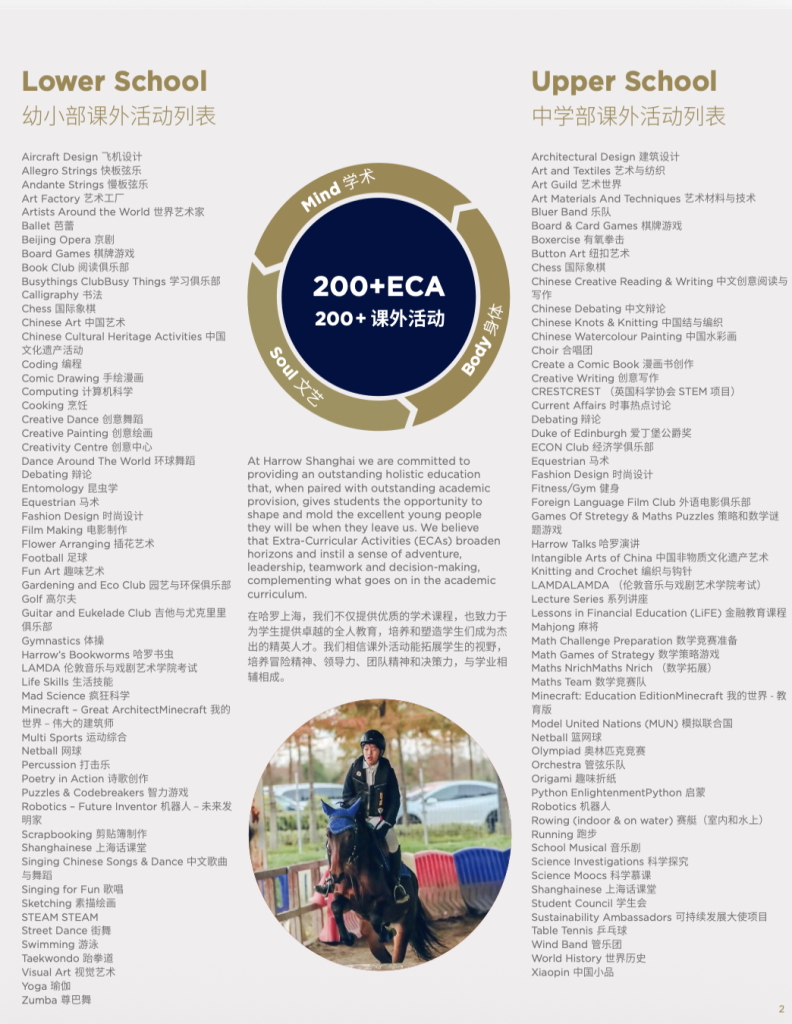
Harrow Shanghai’s ECA programme is an important part of its Holistic Education approach. The school offers more than 200 ECA options, with dedicated ECA time from 15:00 to 16:00 every Monday to Thursday. ECA activities are not simply extracurricular pursuits; they broaden students’ horizons while developing their spirit of adventure, leadership, teamwork and decision-making skills, complementing their academic learning. Many clubs are independently created and led by students, allowing them to expand their perspectives through a diverse range of experiences and develop leadership skills through practice.
The School’s Comprehensive Support
The growth of Team 25720 FATAL NEMESIS has been made possible by the school’s systematic support. In the early stages of the team’s establishment, ECA Coordinator Mr. Dan Jeffries quickly helped bring the initiative to life by arranging a dedicated classroom and supporting recruitment promotion. After learning that the large space required for robot testing and the frequent transportation of equipment placed a significant burden on the team, Head Master Alex approved a permanent base classroom for the team.The Marketing Department also provided ample exhibition space during major events such as Open Day, and after the team’s victory, shared their achievement through the school’s official media channels at the earliest opportunity.
The coaches serve as “guides and a strong support system” for the team— helping students systematically learn the fundamentals of hardware, software and project management, coordinating the smooth operation of the season’s activities, and accompanying the team safely throughout competitions.When students encounter technical challenges or operational difficulties, the coaches provide guidance, inspiration and professional advice. However, all key achievements and implementation work are led by the students themselves: from 3D robot concept design, mechanical construction and programming development, to engineering notebook preparation and community outreach initiatives, every aspect is independently completed by the students.
From a Startup Team to Global Champions
The strongest demonstration of student agency lies in the team’s journey of building itself from the ground up. The founding team consisted of just three students, with no members, no venue and no funding. Yet, like a start-up team, they proactively presented the value of the competition and their team development plan to the school. During the school’s Open Day, the students gave the Head Master a detailed presentation on the team’s goals and implementation plan. Their professional approach impressed the school, and they successfully secured a dedicated training classroom. To address the gaps in research and development funding and equipment resources, the entire team took part in business outreach, independently creating standardised sponsorship proposals and successfully securing corporate sponsorship. After months of dedicated effort, the team completed a full transformation from zero to one.
Ten Months of Dedication, A Lifetime of Growth
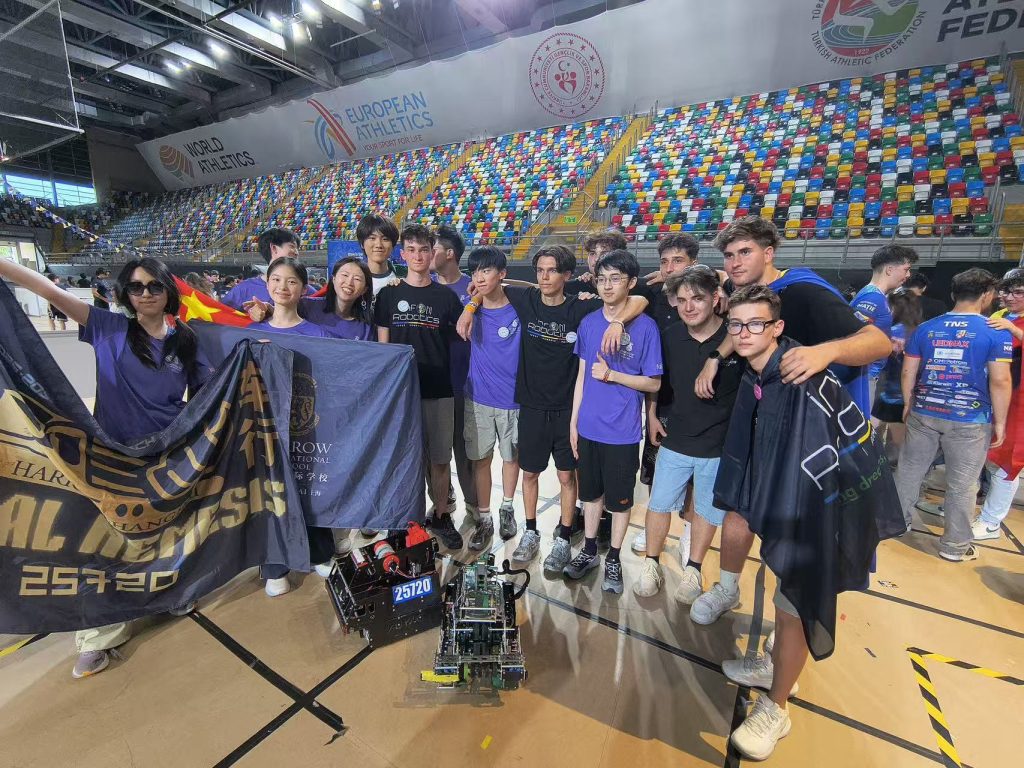
The ten-month preparation period was a comprehensive test of the team’s mindset and perspective. Their coach Luna observed, “The students have moved beyond impatience and fear of difficulties, developing the courage to face challenges and the ability to remain calm when problems arise.” When the team encountered emergencies such as power failures during the Türkiye competition, members worked through the night to repair the robot and never gave up. They understood that a competition is never a battle fought by one person alone — while the players on the field remained focused and composed, the teammates behind the scenes provided quiet support. Together, through ten months of dedication, the entire team created this global achievement.
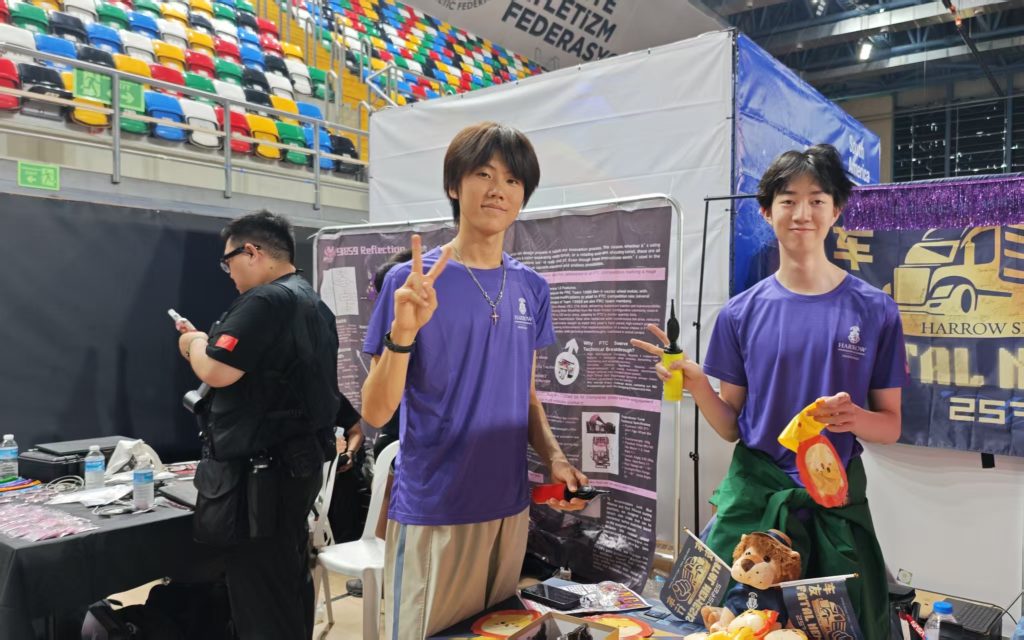
At Harrow Shanghai, education extends far beyond books and classrooms. From robotics clubs to more than 200 ECA choices, from student-led initiatives to comprehensive support from the school, Harrow Shanghai brings holistic education to life through meaningful experiences — enabling every student to discover their passions and grow into confident, resilient young people through real-world challenges.
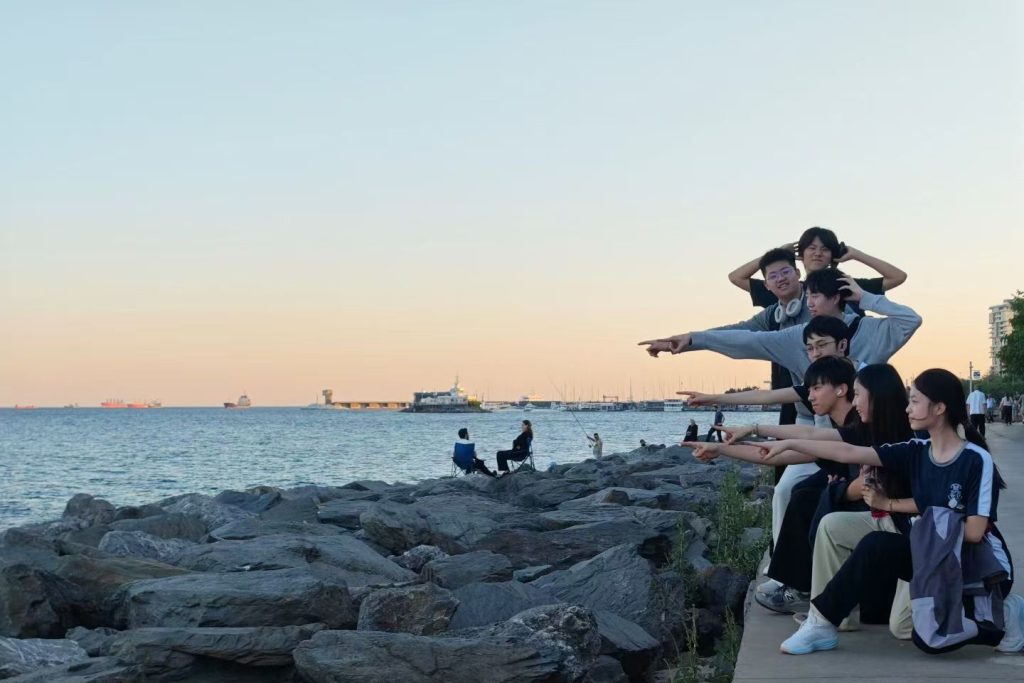
Congratulations once again to this season’s members——Austin Z., Rocky X., Ryan Y., Quanyi Y., Sophia Z., Shirley J., Emily H., Lawrence Z., and Rod W.—on becoming FTC Premier Event Overall Champions! The story of Team 25720 FATAL NEMESIS shows us that when students are trusted and given the space to explore, they can create far more than a championship trophy — they develop the courage and capabilities to face any challenge the future may bring.